
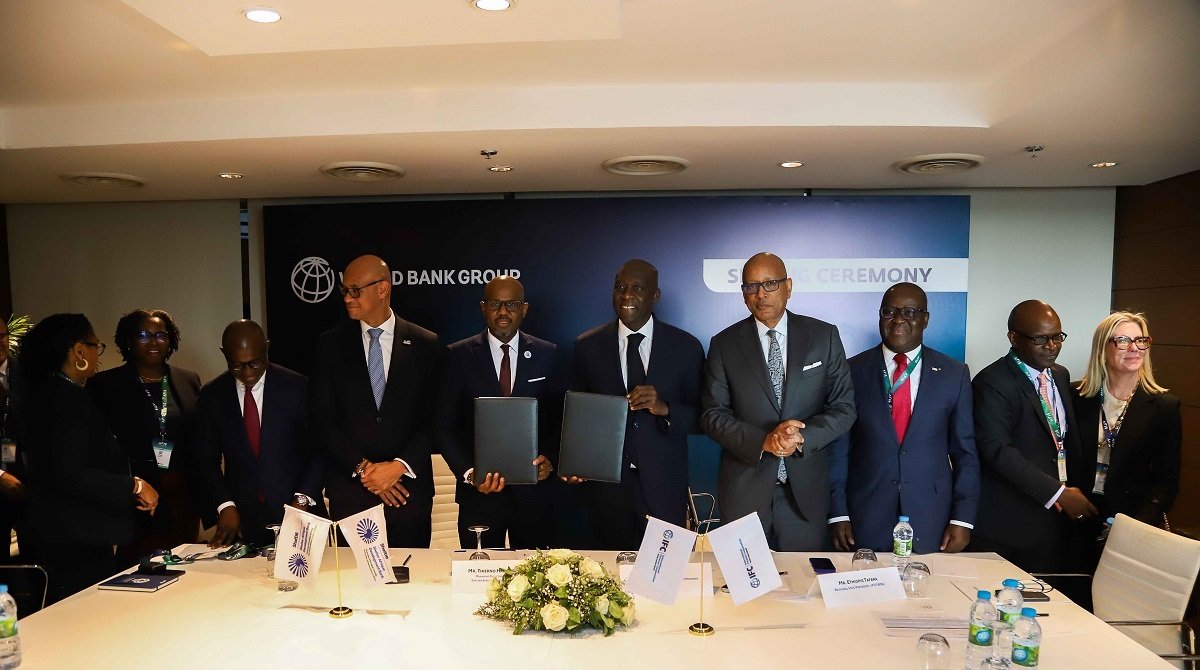
- Funds to finance affordable housing across the eight-nation West African Economic and Monetary Union, in a transaction anchored by the International Finance Corporation and Ecobank Group.
Shelter Afrique Development Bank has closed its first local-currency sustainable bond, raising FCFA 60 billion (about $100 million) to finance affordable housing across the eight-nation West African Economic and Monetary Union, in a transaction anchored by the International Finance Corporation and Ecobank Group that marks a significant step in the development of the region’s capital markets.
The Nairobi-based multilateral lender said subscriptions, which ran from 7 to 30 October, attracted strong demand from a diverse investor base. The bond comprises a five-year tranche priced at 6.10 per cent and a seven-year tranche at 6.30 per cent. CGF Bourse acted as lead arranger, with UCA as co-lead manager. The West African Development Bank, known as BOAD, was among the main participating financial partners.
Housing deficit
The issuance is notable for matching the currency of financing to that of project revenues, shielding borrowers from foreign-exchange risk, a persistent obstacle to housing finance in a region where mortgage markets remain shallow and long-term local-currency funding is scarce. The World Bank estimates WAEMU faces a housing deficit of about 3.5m units, with roughly 250,000 additional homes needed each year.
ShafDB said the first phase of the programme would finance a pipeline of 17,554 housing units and create 87,772 jobs across the union. Proceeds are dedicated exclusively to affordable, sustainable and energy-efficient housing.
The transaction was approved by the regional regulator, the Autorité des Marchés Financiers de l’UMOA, and the central bank, BCEAO. ShafDB developed its Sustainable Finance Framework with the Global Green Growth Institute, securing a favourable opinion from S&P Global Ratings for alignment with internationally recognised principles including the ICMA Green Bond Principles and Sustainability Bond Guidelines.
“Africa has the capital to finance more of its own housing needs,” said IFC Managing Director Makhtar Diop. “The opportunity is to connect those savings with long-term investment that can put more families in homes, strengthen local businesses, and create jobs. Our partnership with Shelter Afrique Development Bank is an important step toward building the deeper local capital markets needed to make that happen.”
The IFC anchor investment agreement was signed on the sidelines of the African Financial Summit in Angola. Ecobank, through Ecobank Senegal, also anchored the deal. Group chief executive Jeremy Awori said housing was “more than bricks and mortar”, describing it as “a value chain that runs from land and materials to developers, mortgage providers, and the families who finally own their homes”.
Read also: Stable outlook for housing lender Shelter Afrique as GRC upgrades ratings
Shelter Afrique bond a template for replication
ShafDB managing director Thierno-Habib Hann framed the bond as a template for replication across the continent. “With a housing deficit of over 53 million units, no single institution can close this gap alone,” he said. “That is why we structured this transaction with commercial, regional, and international partners to accelerate access to affordable, sustainable housing and invest in the broader housing value chain.”
GGGI Africa regional director Katerina Syngellakis said the issuance “creates a clear pathway for directing investment toward affordable and resource-efficient housing while strengthening the role of local capital markets in advancing sustainable development objectives”.
The deal underscores growing momentum behind thematic local-currency issuance in francophone West Africa, where corporates and supranational borrowers have increasingly turned to the regional market to fund infrastructure and social projects. For ShafDB, the bond diversifies its funding base away from hard-currency borrowing and supports its mandate to bridge Africa’s housing gap.
Analysts said the participation of IFC and Ecobank as anchor investors was likely to catalytically draw in regional institutional investors, including pension funds and insurers, seeking long-duration assets. The successful close may also encourage other development finance institutions to explore FCFA-denominated sustainable issuance, deepening a market that policymakers have long sought to broaden.
ShafDB said it intends to replicate the structure in other African markets, signalling ambitions for a series of local-currency sustainable bonds. The lender did not disclose the final allocation of investors by category.
Read also: Shelter Afrique taps green bonds to raise funds for affordable housing in West Africa

Leave a Reply