
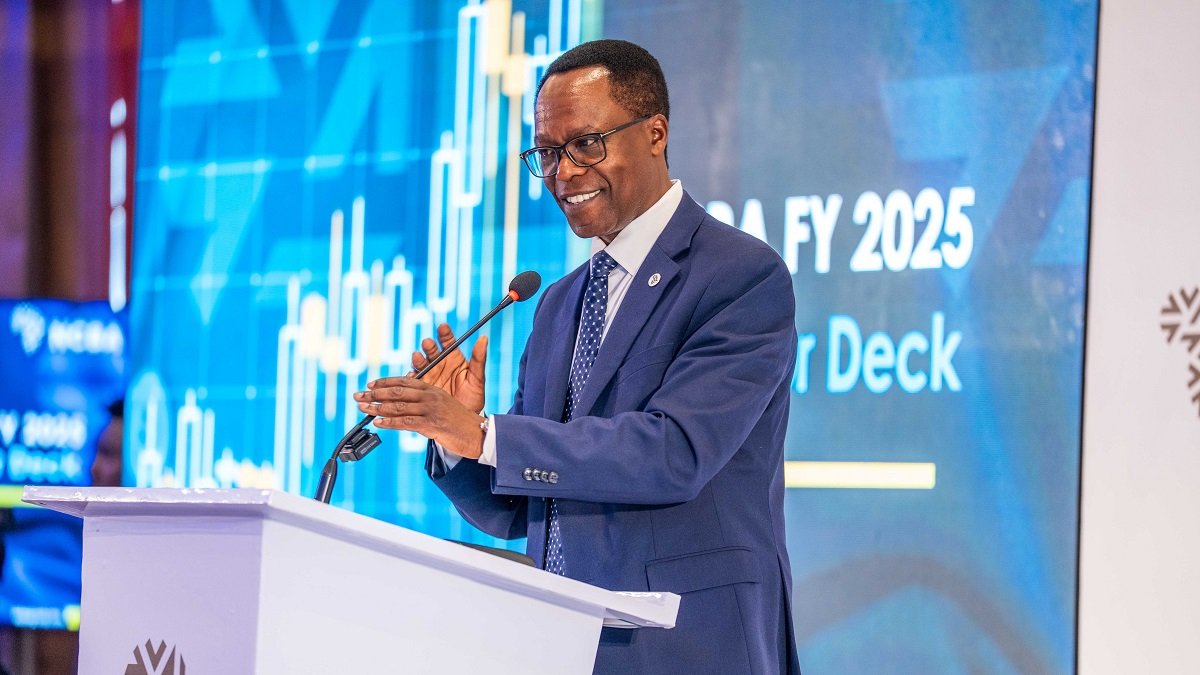
- Nairobi-headquartered, NCBA, a new subsidiary of Nedbank has posted broad-based growth across five markets, but a near-doubling in credit provisions signals tightening conditions for corporate borrowers.
- Kenya’s third-largest lender by assets remains on course for double-digit earnings growth despite a sharp rise in impairment charges.
- The completion of South Africa’s Nedbank’s 66% acquisition marks one of the region’s most significant cross-border banking deals in a decade.
NCBA Group PLC has reported a 14.5 per cent increase in profit after tax to KES 18.8 billion for the nine months to September 2026, delivering a robust set of results in its first reporting period since South Africa’s Nedbank Group completed its acquisition of a controlling stake in the Nairobi-listed lender.
The results, which were published on Wednesday, offer an early indication of the franchise Nedbank has acquired: a diversified East African banking group spanning Kenya, Uganda, Tanzania, Rwanda and Ivory Coast, serving over 60 million customers, and generating double-digit growth in both revenue and earnings even as credit conditions across the region tighten.
Operating income rose 14.7 per cent year on year to KES 61.3 billion, while profit before tax climbed 14.6 per cent to KES 23.4 billion. Net interest income surged 19.8 per cent to KES 38.4 billion on the back of 10.7 per cent loan growth, and non-funded income increased 7.2 per cent to KES 22.9 billion. Return on average equity stood at 19.0 per cent.
NCBA impairments cast a shadow
The headline growth was tempered by a sharp increase in credit losses. Provisions for loan losses rose to KES 8.0 billion from KES 5.1 billion a year earlier, an increase of nearly 57 per cent, which NCBA attributed to a decision to bolster coverage on a small number of corporate non-performing loans.
The group’s NPL ratio held at 10.1 per cent, unchanged from the prior year, and total capital adequacy stood at 21.4 per cent, well above the 14.5 per cent regulatory minimum. CEO John Gachora described the higher charges as evidence of “continued commitment to asset quality and credit risk prudence.”
Even so, the jump in provisions will draw scrutiny across a region where high interest rates and subdued private-sector activity have strained corporate borrowers, particularly in Kenya, where several lenders have reported rising stress in their commercial loan books over the past 18 months.
Kenya remains the engine
NCBA Bank Kenya continued to dominate group earnings, contributing 86 per cent of profit before tax, supported by disciplined funding-cost management and cost control. Operating expenses rose just 4.3 per cent to KES 29.1 billion, less than a third of the pace of revenue growth, delivering strong operating leverage.
The regional subsidiaries in Uganda, Tanzania and Rwanda contributed a combined KES 2.7 billion in profit before tax, lifted by 21 per cent lending growth and a 17 per cent rise in customer deposits. The non-banking businesses, NCBA Investment Bank, NCBA Insurance, Leasing and Bancassurance, added KES 1.1 billion.
On the balance sheet, customer deposits reached KES 554 billion, up 13.5 per cent, and total assets closed at KES 744 billion, an 11.8 per cent increase. Digital loans disbursed rose 27.2 per cent to KES 1.3 trillion, reflecting the group’s continued push into high-volume, technology-driven lending, a segment in which it is a regional leader alongside its corporate and asset finance franchises.
A new chapter under Nedbank
South Africa’s Nedbank completed its acquisition of a 66 per cent controlling stake in NCBA on November 3, following a public announcement on October 21, in one of the most significant cross-border banking combinations in East Africa in recent years. NCBA remains listed on the Nairobi Securities Exchange, with the remaining 34 per cent held by the public.
The transaction gives Nedbank a controlling foothold in East Africa’s largest economy and a platform across the wider region. For NCBA, it promises access to deeper capital markets, stronger governance frameworks and South African expertise in digital banking and wealth management, resources the group will need as it executes its UBUNTU 2026-2030 strategy.
Mr Gachora said the group was “positioned to boldly pursue” regional growth projected at between 4.8 per cent and 7.4 per cent despite global macroeconomic headwinds, and to “accelerate outcomes through the backing of Nedbank Group.”
Read also: Kenya’s NCBA’s regional bet pays off, positioning lender for South Africa’s Nedbank era
Operational gains and green ambitions
Beyond the financials, NCBA reported improvements in service reliability, with system uptime at 99.7 per cent and digital channels’ net promoter score rising to 71. It opened its 100th Kenyan branch, at Nord Mall in Ruiru, and launched Property Duka, which it describes as East Africa’s first AI-native property ecosystem. Its corporate internet banking platform, ConnectPlus, generated 91,000 transactions worth KES 44 billion, lifting transaction banking fee income 2.5 times compared with the second quarter.
The group also advanced its sustainability agenda, signing e-mobility financing partnerships with ePure Motion and BasiGo in Kenya and Kason Motors in Rwanda, converting 37 per cent of its corporate fleet to electric vehicles, and lifting green financing disbursements to KES 5.6 billion in 2026. Community investments exceeded KES 90 million, the group said, impacting more than 850,000 livelihoods.
For Africa-wide investors, NCBA’s results present a test case for cross-border banking consolidation on the continent. The group’s diversified model, spanning corporate and asset finance, digital lending, investment banking, insurance and leasing across five markets, offers insulation against any single economy’s downturn. But rising impairments and the complexities of integrating a new controlling shareholder will test whether double-digit earnings growth can be sustained.
Read also: Kenya’s NCBA Group becomes a subsidiary of Johannesburg-listed Nedbank

Leave a Reply