
- From ambitious push to infuse transparency in elections to debt management and financial inclusion, blockchain technology is taking up a bigger role in Africa’s increasingly digital economy.
With an avalanche of scams denting the image of crypto transactions, pioneers in Africa’s blockchain technology have spent the past decade partly fighting a reputational war.
However, in an increasingly digital first continent, blockchain technology is gaining acceptance, and in Africa, savvy innovators are setting up the core infrastructure to drive financial inclusion, manage debt, streamline governance while also building systems to enhance transparency in elections.
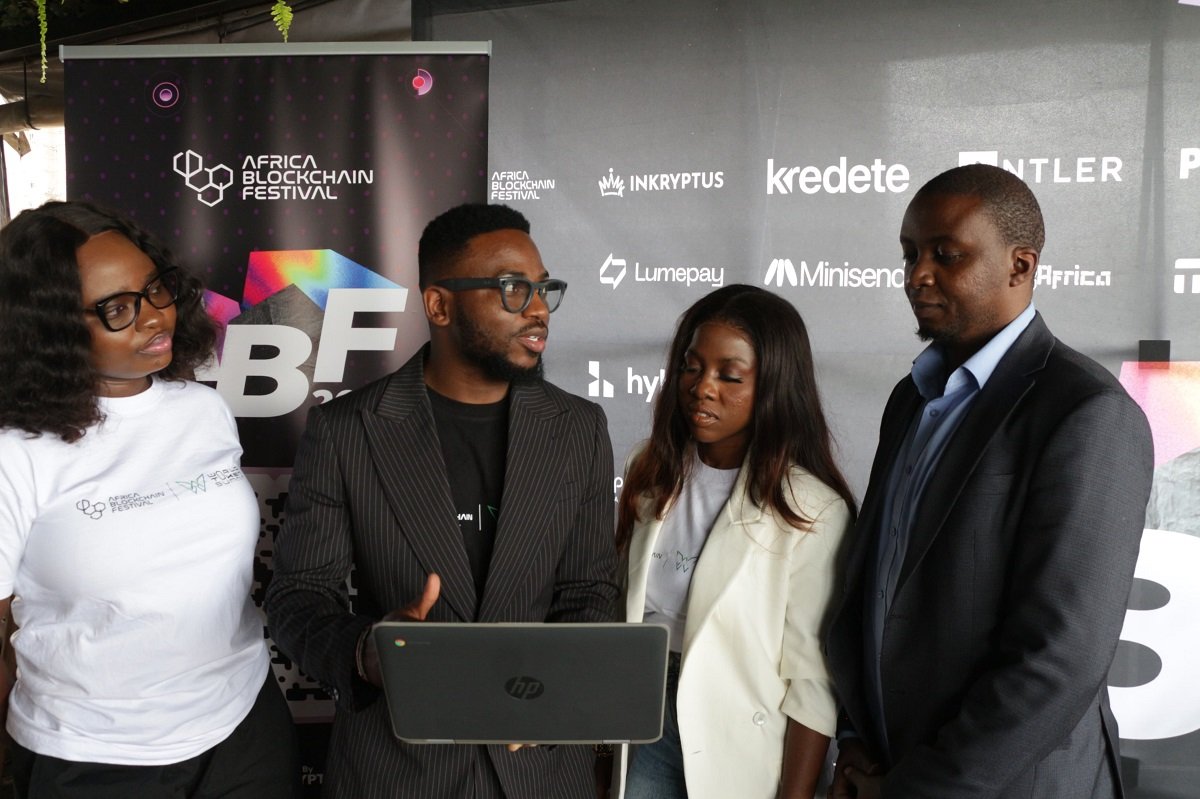
Ahead of the Africa Blockchain Festival 2026, which opens in Nairobi on 15 October, two leading voices in the sector share deep insights on how the emerging technology can see Africa accelerate growth at the speed of need.
Peter Mwangi, Kenya Country Manager for crypto exchange firm, VALR, and Olubunmi Fabanwo, Founder and Convenor of the Africa Blockchain Festival, offer complementary visions of what blockchain technology can do at scale for Africa.
While Mwangi focuses on capital markets, employment and scaling African financial institutions, Fabanwo zooms out to questions of governance, transparency, and democratic accountability. Together, their responses showcase a roadmap for a technology that is finally finding its purpose using homegrown initiatives.
Blockchain technology: Licensing as a Catalyst for Capital
For Mwangi, the most immediate and tangible use case for blockchain in Africa is economic. He argues that the licensing of the industry will unlock billions of dollars in investment. That capital, in turn, will help create much needed jobs and generate wealth, particularly for millions of young people.
Recently, Kenya moved to regulate virtual asset service providers by gazetting the Virtual Asset Service Providers Regulations, 2026 (Legal Notice No. 134 of 2026) under the Virtual Asset Service Providers Act, 2025.
“Now that we have gone ahead to license this industry, billions of dollars in investments will come into this market,” he said last week during a media briefing. “That means more employment opportunities for people. Number two is to create new wealth for the people of Kenya, for young people and all over Africa.”
At the moment, Kenya is grappling with employment crisis with roughly one million young people joining the job market every year. Job creation and wealth generation, he argues, are use cases that any government, anywhere, can understand. “It makes sense,” Mwangi says. “Create employment, generate wealth for the people.”
Tokenized Stocks and Sovereign Bonds
Beyond employment, Mwangi identifies two financial instruments that blockchain technology will democratize: tokenized stocks and sovereign bonds. Tokenization allows real-world assets such as equities, real estate and debt to be represented on a blockchain, enabling fractional ownership trading round-the-clock in the financial markets. For African investors, this opens access to global markets that were previously out of reach.
“There is a new class of investment that is coming in the market, like tokenized stocks,” Mwangi says. “So you can be able to buy stocks somewhere from a company in America.”
More significantly, he predicts that African governments will soon issue sovereign bonds on the blockchain. This would allow anyone, anywhere in the world, to participate in African debt markets. This offers a radical shift from the current system, where sovereign bonds are typically accessible only to large institutional investors.
“We’ll be able to see governments issuing bonds on the blockchain and anyone, anywhere in the world will be able to participate,” he says. “And all of that will be made possible through stablecoins.”
Read also: Africa’s digital economy infrastructure top agenda as Nairobi hosts blockchain festival
Scaling African Banks Beyond Borders
Mwangi’s fourth use case is perhaps the most strategically important: the ability for African financial institutions to scale globally. Most African banks operate within a single country or, at best, a regional bloc. Blockchain, particularly through the issuance of African stablecoins, could allow them to serve customers worldwide without the traditional costs of cross-border banking infrastructure.
“With the adoption of the blockchain industry, especially with the issuance of African stablecoin currency, Kenya banks, African banks, will be able to scale all over the world,” Mwangi explains, adding: “They’ll have people all over the world using their products and services.”
His vision shows that blockchain technology has the power to help reverse a decades-long trend where African financial institutions have been marginal players in global markets. Blockchain, in Mwangi’s view, could offer that rare opportunity to leapfrog.
Electronic Voting and the Transparency Dividend
While Mwangi focuses on markets dividends, Fabanwo sees governance winning big with the adoption of blockchain technology. For Fabanwo, who is the convenor of the Africa Blockchain Festival, the most powerful use case for blockchain in Africa is not financial at all. It is democratic. With a wave of elections scheduled across the continent over the next three years, he argues that blockchain-enabled e-voting could transform how citizens participate in and verify often contested electoral outcomes.
“Blockchain has a use case in e-voting,” he states. “As soon as votes are counted across every jurisdiction, at every point in time, everybody has access to the information.”
The problem with elections, Fabanwo notes, is not merely logistical. It is a crisis of trust. “The reason why elections have been very chaotic and I’m not talking about only Africa, generally all over the world, is because we assume or we know that people go behind the scenes to cook up numbers.” Blockchain, by creating an immutable and transparent ledger, removes that possibility.
He envisions a future where a citizen sitting at home can watch votes being cast and counted in real time, with every transaction visible on a public ledger. “When one person votes, I can see who they have voted for, what time they voted and what the impact of that voting is.”
Several countries have already tested blockchain-based voting systems, and Fabanwo predicts that more will follow within five years.
Read also: Africa Blockchain Festival ignites a new dawn for African innovation
Technology Made for Africa
Fabanwo’s broader argument is that blockchain is uniquely suited to Africa’s challenges. The continent has long suffered from opacity, weak institutions and limited access to information. Blockchain, with its promise of decentralization and transparency, offers a corrective.
“We’ve had issues with transparency, we’ve had issues with access to information,” he says. “Internet got to Africa last, so we didn’t know all the things that were happening all over the world. So in that sense, this is made for us.”
He goes further, suggesting that Africa could leapfrog the West. “We can go way ahead of United States, the West, China, wherever it is, by utilizing more use cases to solve African problems.”
Both Mwangi and Fabanwo acknowledge that Africa stands at a critical moment. The convergence of blockchain and artificial intelligence, the licensing of virtual asset industries and the growing willingness of governments to engage with the technology have created a moment of rare opportunity.
The Africa Blockchain Festival 2026, running from 15-17 October at the Sarit Expo Centre, will bring together policymakers, regulators, investors, and founders to confront the hard questions: How should digital assets be regulated? How can African startups access global capital? How can blockchain be used to reduce transaction costs across fragmented markets?
The answers will determine whether Africa becomes a builder of digital infrastructure or remains a consumer of it.

Leave a Reply