


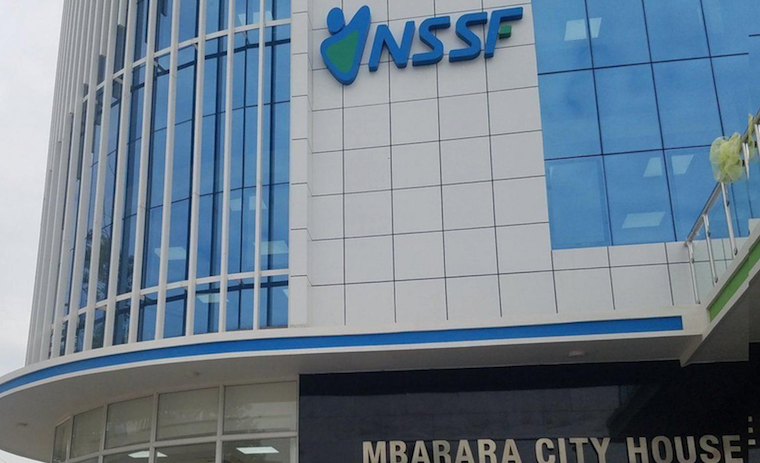
Every three days, NSSF (National Social Security Fund) sends me a spammy phone message to the effect that I haven’t made due contribution for four months even though I don’t owe them even a cent!
I have called the number indicated in their messages (0705412787) and their excuse was that “maybe it’s not yet reflected in the system”.
Why should NSSF make me suffer if their “system” has problems?
They asked me to provide them with my receipts, which I promptly did. They shouldn’t ask me for the receipts in the first place since it is they who have systems that don’t work. Despite contacting them and providing them with the receipts as they asked, I continue to receive their spammy messages!
To be fair, NSSF is not the only one that spams me. I also get unsolicited messages from Stanbic, URA (Uganda Revenue Authority), and NW&SC (National Water and Sewerage Corporation), not to mention random messages to wedding meetings and funerals.
But NSSF is by far the largest culprit. I have never consented to receiving their messages. Whenever you register for anything from those
entities, they force you to give them your number. They never ask you whether they can send you messages.
If you have never given them your number, they somehow buy the information from the telecom companies. I never gave NSSF my contacts before they started sending me messages. I suspect they got the contacts from URA (Uganda Revenue Authority). That, in itself, is highly unethical.
F. Kirungi,
Kampala.
MPs should stop playacting
The scuffles involving members of parliament and the fierce defence of positions on critical issues such as the Coffee Bill have not come at the wrong time.
The election fever ahead of Uganda’s 2026 general elections has intensified, earlier than expected. Therefore, anyone willing to score points for public sympathy of any magnitude might be more than willing to act the part.
For example, why would a small scuffle in parliament lead to a member ofparliament ending up in hospital, under the glare of cameras from the media? How come barely 24 hours later, another member of parliament is in hospital over an entanglement with the police?
If we were to look at issues that voters prioritize, how much have these MPs that are looking for sympathy done in the current electoral term?
I believe Uganda is a country where people can distinguish acting to the gallery from dealing with issues that concern them. Therefore, MPs would rather tell us what they hope to achieve should they be re- elected than just playing to the gallery. Otherwise, the public will always know when they are being taken for a ride.
Andrew Kasumba
Kampala
Iteso yet to get Catholic bishop
The first Catholic church was established in Teso, specifically Ngora district, in 1912.
More than 112 years later and counting, Iteso are yet to celebrate the coronation of the first-ever Catholic bishop of their own kinship! In her video which went viral nearly 15 years ago, titled ‘The Danger of a Single Story,’ Nigerian author Chimamanda Adiche states categorically, “The best way to dispossess people is to address them beginning the story with: And secondly…”.
Throughout my childhood, Teso (Soroti diocese) was under the custodianship of Bishop Erasmus Wandera, a Musamia from Busia (Tororo diocese). After Wandera died, Soroti diocese remained without a bishop for years, leading to the pile-up of Christians who could not be confirmed into their faith.
By 1986, the population of Iteso was neck-to-neck with that of the Baganda. Economically speaking, Teso was the food basket of Uganda. Two thirds of all the livestock in Uganda were from Teso.
Soroti Meat Packers, one of the largest meat packing plants in East Africa, operated at full capacity for many years. How could we excel in all sectors and spheres of life but fail to raise a bishop?
Greg Olupot,
Kampala.
Trump’s win could hurt Uganda
Donald Trump’s re-election signals an ongoing shift in U.S. foreign policy that could have significant consequences for Uganda. For decades, the USA has been one of Uganda’s largest donors, supporting critical sectors including health, agriculture, and infrastructure.
However, Trump’s “America First” agenda, characterized by cuts to foreign aid, is set to continue. As Uganda grapples with the reality of reduced support, the country faces a glaring choice: can it rise to the challenge of self-reliance, or will it buckle under pressure?
Under Trump’s first term, U.S. foreign aid to Uganda was slashed across several key sectors. The PEPFAR program, which has provided life-saving HIV treatment to over 1.4 million Ugandans, was one of the hardest-hit. In 2020, Uganda’s PEPFAR funding was reduced by $50 million, threatening the country’s efforts to manage its HIV/AIDS crisis.
This cut is not just a financial setback; it is a public health risk, as it directly impacts access to antiretroviral therapy for thousands of vulnerable Ugandans.
Agriculture, which supports 80 per cent of Uganda’s population, was also affected by cuts to the Feed the Future initiative. U.S. funding for agricultural development, which once reached $100 million annually, helped farmers increase crop yields and improve food security.
With this funding now reduced, Uganda’s already vulnerable rural population faces even greater uncertainty, particularly as the country deals with rising food prices and the impact of climate change on agriculture.
Energy is another critical sector that has been undermined by the U.S. aid cuts. Power Africa, a U.S. program aimed at expanding electricity access in sub-Saharan Africa, faced reductions in funding. In Uganda, where less than 20 per cent of the rural population has reliable access to electricity, this loss hampers efforts to modernize infrastructure and spur industrial growth.
While the cuts in foreign aid are significant, Uganda’s deeper problem lies in its own mismanagement of the resources it receives. Corruption has long plagued the country, with reports consistently highlighting the diversion of funds meant for critical development programs.
In the health sector, millions of dollars intended for HIV/Aids programs have been lost to corruption. The Uganda auditor general’s reports have uncovered massive discrepancies in health budgets, with funds either stolen or poorly-allocated.
This culture of mismanagement extends to infrastructure projects as well. The mismanagement of foreign aid funds has undermined Uganda’s ability to make the most of external support.
If the government does not address corruption and improve its public financial systems, even with foreign assistance, development will remain stunted.
Ivan Munguongeyo,
ivanmungu12@gmail.com
letters@observer.ug
Source: The Observer
Share this content: