


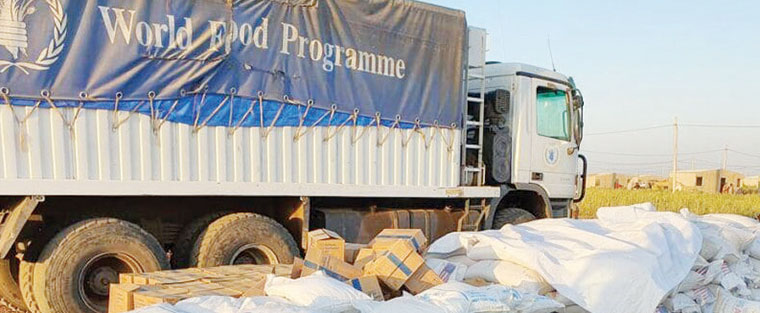
The United Nations World Food Programme (WFP) in Uganda has received a significant boost in the form of a $1.3 million (Shs 5 billion) donation from the Norwegian government.
The funds will be used to provide hot meals for new refugee arrivals from the Democratic Republic of Congo (DRC) and South Sudan. This comes on top of a $1.7 million (UGX 6.4 billion) contribution made by Norway earlier this year, bringing Norway’s total support for WFP’s refugee initiatives in Uganda to $5.8 million (Shs 22 billion) for 2022/2023.
“As of 31 August 2023, more than 80,000 new arrivals from the DRC and South Sudan have been registered, adding to the existing 1.6 million refugees in Uganda,” said Anne Kristin Hermansen, Norway’s ambassador to Uganda.
“This funding underlines Norway’s commitment to the refugee response in Uganda.”
WFP STRUGGLES AMID FUNDING GAPS
Despite supporting 1.4 million refugees with monthly food and cash assistance, WFP faces significant financial challenges that force it to distribute reduced rations. The organization is currently providing 60% of the food ration to the most vulnerable refugees, 30% to moderately vulnerable refugees, and has ceased food assistance to the least vulnerable.
“This contribution is vital for us to meet the needs of both existing and newly arrived refugees,” stated Abdirahman Meygag, country director of WFP Uganda. “It will enable WFP to provide hot meals to new arrivals at transit and reception centers.”
SOARING RATES OF FOOD INSECURITY
The August 2023 Food Security and Nutrition Assessment (FSNA) survey revealed a worsening food security situation in Uganda’s refugee settlements, with an 11% increase in food insecurity compared to last year. Additionally, there is an anticipated rise in negative coping mechanisms due to the challenging circumstances.
FOCUS ON SELF-RELIANCE
In an innovative step, WFP is working on income-generating activities aimed at greater self-reliance for refugees and host communities. Norway has also contributed $2.8 million (Shs 10.5 billion) towards this self-reliance pathway, in line with the Government of Uganda’s Comprehensive Refugee Response Framework.
This additional funding aims not only to provide immediate relief but also to equip refugees with the skills and opportunities to move away from solely relying on humanitarian assistance to meet their essential needs.
Source: The Observer
Share this content: