


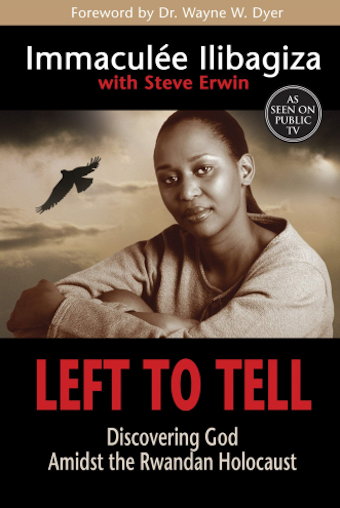
I have avoided reading Immaculée Ilibagiza’s 2006 book, Left to Tell (Discovering God Amidst the Rwandan Holocaust), because I knew it was about the 1994 genocide and I did not want to feel depressed.
But I recently received a free electronic copy and surrendered to the urge to see if it is all it has been billed to be over the years. In just two days, I was done reading it; it is that unputdownable.
And yes, it left me feeling depressed and angry; so much so that I woke up in the middle of the night just to meditate about Ilibagiza’s story, the mystery of the human race and how much evil God can actually permit to happen.
The book tells how Ilibagiza spent three months in a tiny toilet/bathroom with seven other females – first, packed in there like sardines, and later in roomy conditions as they physically withered away and the bathroom seemed larger.
She tells the unbelievable story of how she started a personal, intimate relationship with God under those circumstances, where He regularly talked to her, comforted and reassured her, even as outside, her entire family was being hunted and butchered like animals.
It is a remarkable story of resilience, crazy faith, unbelievable healing and above all, unimaginable brutality at the hands of fellow Rwandans.
When I was done reading about Ilibagiza’s interesting relationship with God, I felt ashamed thinking about the things I usually fret about to God.
But also, I felt the urgent need to recommend this book to every Ugandan that has not read it and thinks issues of tribalism and inequality are a joke that should not be paid any attention.
I have been following recent debates on social media about tribalism and have seen how some people trivialize it and the underlying tensions and resentment. My friend, read Left to Tell.
It is like a legion of devils descended upon Rwanda and infested her people, who in turn ran berserk and killed their brothers and sisters the way one deals with pests.
For one person to boast of having killed 399 Tutsis… heartbreaking. Read the book and you will understand better why we need to handle issues of nepotism, tribalism and segregation with the sensitivity of one demining a field after a civil war.
malita@observer.ug
Source: The Observer
Share this content: