


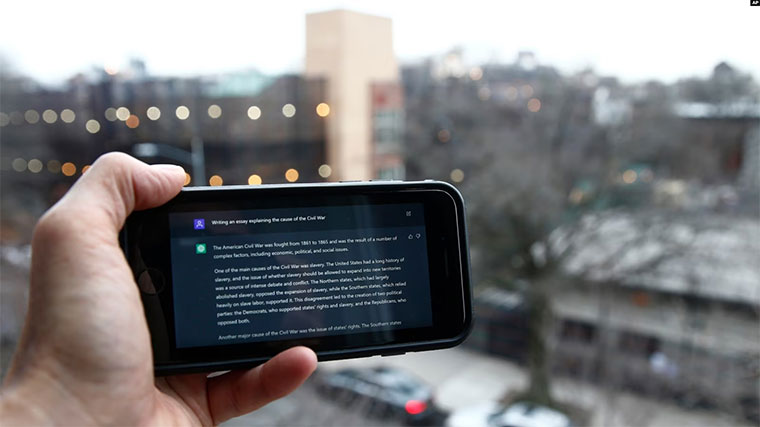
George R.R. Martin made headlines a few days ago when he filed a lawsuit against OpenAI, the company behind ChatGPT, for copyright infringement.
And before you scoff at the lawsuit, Martin is merely one of several writers suing OpenAI. Other notable names include John Grisham, Jodi Picoult, and George Sanders. In one Forbes article, the Authors Guild used terms like “systematic theft on a mass scale” to describe OpenAI’s crimes.
So, why are Martin and his friends so angry? Apparently, OpenAI trained ChatGPT by exposing the language model to the works of authors without their permission. By teaching ChatGPT to replicate Martin’s work, OpenAI threatens Martin’s livelihood.
Admittedly, Martin has plenty of money. Even if his career ended tomorrow, he would spend the rest of his life in the lap of luxury. But what about less successful fiction writers who live hand to mouth?
Martin and the Authors Guild believe that OpenAI could have avoided this debacle by using public domain content or paying a fee to use copyrighted works. If the lawsuit succeeds, the courts may compel OpenAI to pay $150,000 in damages for each piece of infringed work.
The Law may also force companies like OpenAI to introduce safeguards that prevent language models from mimicking the works of renowned authors. If you think this concern is silly, IGN published a story back in July 2023 about a man who finished George R.R. Martin’s A Song Of Ice And Fire series.
If you live under a rock, you may not know that Martin’s fans have spent over a decade waiting for The Winds of Winter, the next novel in the Game of Thrones series. Martin is supposedly making decent progress on the manuscript. But many people doubt the book will ever see the light of day.
Guess what Liam Swayne did? He used ChatGPT to write The Winds of Winter and A Dream of Spring, the final books in Martin’s most successful franchise.
And even though Swayne guided ChatGPT with prompts, the AI platform did most, if not all, of the writing. IGN included links to the books, but the links no longer work, which does not surprise me.
It looks like Swayne took the books down. But you can find them if you really try. Swayne’s experiment eased a lot of the anxiety swirling through the publishing community, because ChatGPT’s books suck. So clearly, the language model has a long way to go before it becomes a legitimate threat to human writers.
But that has not stopped people from attempting to hold OpenAI accountable for the platform’s failures. Consider Brian Hood, a regional Australian mayor who threatened to sue OpenAI in April because ChatGPT kept telling the public he went to prison for bribery.
When his followers revealed the discrepancy to Brian, he was appalled. While the mayor was involved in a bribery scandal, he was actually the party that notified the police about the crime. Meanwhile, Mona Award and Paul Tremblay took issue with ChatGPT after the platform produced accurate summaries of their novels.
It could only achieve that objective by illegally ingesting their copyrighted works without permission. Bobby Allyn (NPR Tech Reporter) noted in an August 18, 2023 interview that some of the billions of pages ChatGPT routinely collects from the internet are probably copyrighted.
One could accuse ChatGPT of copyright infringement whenever it copies and processes copyrighted material without permission, regardless of the reason or context.
What if someone creates an algorithm to trace and highlight all the copyrighted content ChatGPT has illegally accessed and reproduced to date?
OpenAI wanted to change the landscape by introducing the language model to the world. However, the company’s most ambitious creation could also prove to be its downfall.
Source: The Observer
Share this content: