


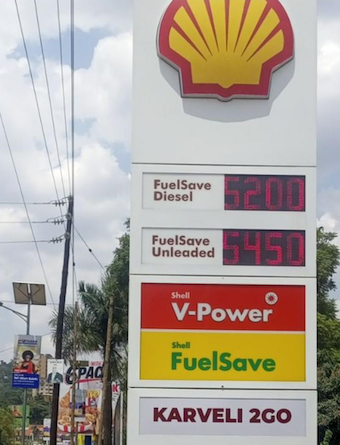
The persistent increase in oil prices is a matter of great concern as it has the potential to impact inflation and the overall economic stability of our nation.
Market dynamics show that Uganda operates a liberalized petroleum market, where prices are determined by the forces of demand and supply, guided by the Petroleum Supply Act of 2003 and related regulations. Being a net importer, our fuel prices are subject to global market fluctuations.
Secondly, approximately 98 per cent of Uganda’s petroleum product requirements are supplied through the Kenya route, utilizing the Open
Tender System (OTS) guidelines. This arrangement, updated in 2023, involves bulk procurement of refined petroleum products consumed in Kenya, Uganda, South Sudan, and parts of eastern DR Congo.
The remaining two per cent is supplied through Tanzania, but this source is less popular due to long distances and higher transport costs, leading to higher landed prices. In all this, it is important to understand that it is global factors that are impacting fuel prices. OPEC+ members have implemented deeper supply cuts to balance the oil market, reducing overall oil production.
This has led to higher crude oil prices as supply tightens. What’s more, the positive sentiment in the global macroeconomic landscape has increased optimism about oil demand, putting upward pressure on prices. Matters are not helped by the increased world oil demand, which has reached record levels, with demand hitting 103 million barrels per day (mb/d) in June, 2023.
August saw another peak in demand, driven by strong consumption during the summer season in Europe and the USA. This surge in demand is a significant factor contributing to rising fuel prices globally. In Uganda, the exchange rate fluctuations continue to influence the fuel prices. The exchange rate against the dollar was Shs 3,615 in July, 2023 and increased to Shs 3,725 in August, 2023, impacting fuel pricing.
Globally, the oil market has seen a notable increase in oil prices, with the price of brent crude oil per barrel surging from $74.35 in July, 2023 to $82.45 in August 2023. Additionally, refined petroleum product prices, guided by Platts, have increased significantly. Diesel prices rose by $135 per tonne, and petrol prices increased by $67 in August compared to July.
These price increases are directly affecting the cost of fuel imported into Uganda, which in turn influences domestic fuel prices. Platts serves as a global authority in the energy industry by providing essential benchmark pricing assessments, market transparency, and insights for various energy products, enabling market participants to make informed decisions, manage risk, and ensure fair and transparent energy trading practices.
When it comes to Uganda’s price-taker status, this means that when global oil prices rise, it directly affects prices at the pump in Uganda. However, despite being a landlocked country, Uganda’s fuel prices remain competitive, and transit trucks often purchase diesel in Uganda before crossing into Kenya due to lower prices.
It is also worth noting that the surge in global oil demand to record levels, especially during the summer season in Europe and the USA, has put immense pressure on oil prices. So, the outlook for the remainder of the year indicates ongoing tightness in global oil markets, with declining inventories and supply cuts extended by Saudi Arabia and Russia through September.
While there is room for the OPEC+ alliance to increase output, maintaining current production targets may lead to further inventory drawdowns of 2.2 million barrels per day in third quarter 2023 and 1.2 million barrels per day in fourth quarter, potentially resulting in higher oil prices.
We continue to vigorously monitor of the market dynamics. In conclusion, the rising fuel prices in Uganda can be attributed to a combination of global factors, including deepening OPEC+ supply cuts, positive macroeconomic sentiment, strong world oil demand, the seasonal impact of the summer season in Europe and the USA, foreign exchange fluctuations, and the notable increase in oil prices, guided by Platts assessments.
While Uganda remains competitive in fuel pricing, it is essential that we continue to monitor these factors closely. We continue to do vigorous monitoring of the global oil market and exploring strategies to enhance security of supply of petroleum products in Uganda since scarcity of fuel in the country can trigger a pricing crisis.
The author is assistant commissioner Petroleum Supply, Ministry of Energy
Source: The Observer
Share this content: