


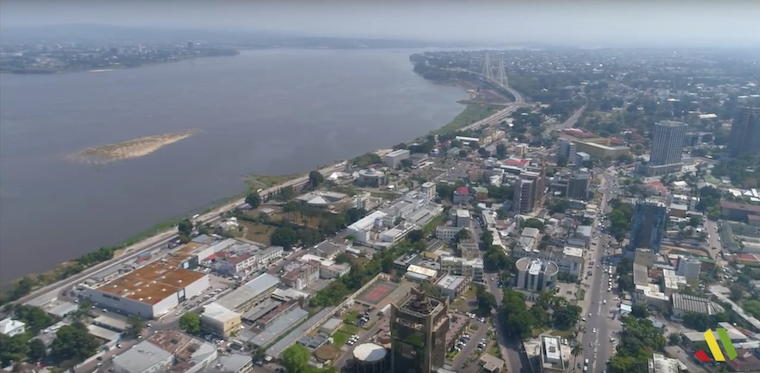
It is evident that there are many business opportunities in DRC especially in Kinshasa.
Uganda has a lot of food, fruits, cereals, vegetables, fish and eggs that are needed in Kinshasa. The challenge is that the tax regime in Kinshasa is so high that profitability will be next to zero, especially for non-Congolese. They have various forms of taxes that one cannot believe.
Everything you touch at is taxed; airport tax, local tax, central government tax, ministry tax, revenue tax, etc. One item can be taxed more than 12 times before it is sold. I think that is why many Ugandans are not doing business in DRC.
When you cross to Juba from Uganda, you will find many Kenyans and Ugandans running many businesses, huge and small. However, in Kinshasa, the story is different. It is only Lebanese that I saw running huge businesses.
How these Lebanese are managing remains a mystery to me. I have been to different African countries and I have not seen a city with a high cost of living like Kinshasa. No wonder when Congolese enter Uganda, they never want to go back.
It is important for Uganda government leaders to negotiate for fair trade with the Kinshasa government. There is no need to struggle with Europe for our coffee, fruits, bananas, peas, beans, posho etc, when our neighbour is starving. The 17 million people in Kinshasa can be a wonderful market for Uganda.
Samson Tinka,
tindsam@yahoo.com
Engage girls in tech
Uganda, like any other developing countries, is experiencing a significant gender digital divide, which is hindering progress and development.
Girls and women do not only have less access to technology and the internet compared to boys and men but also don’t know the meaning of digital transformation.
Digital transformation is the use of technology to enhance and improve processes and operations in various sectors. It is a crucial aspect of development, and many countries are investing heavily in digital transformation to drive progress and growth.
Uganda is no exception, and the government has made significant strides in this area, including the implementation of various policies and initiatives aimed at increasing access to technology and the internet.
However, despite these efforts, the gender digital divide in Uganda remains significant, with girls and women often left behind.
This gap has far-reaching implications, not just for the individuals affected but also for the country’s overall development.
Bridging the gender digital divide is, therefore, crucial to ensure that everyone has access to the same opportunities and resources, regardless of their gender.
There are many benefits to digital transformation. Firstly, it can help to provide girls and women with access to education and training to improve their digital literacy and skills.
This can, in turn, enhance their employability and income-earning potential. Secondly, digital transformation can improve access to healthcare services, particularly in rural areas, where girls and women may face challenges in accessing healthcare facilities.
Digital health solutions can help bridge this gap and ensure that everyone has access to essential healthcare services.
Digital transformation can help promote gender equality and social inclusion by providing a platform for women to voice their opinions, participate in decision-making processes, and engage in civic activities.
This can help break down traditional gender barriers and promote women’s leadership and participation in various sectors, including politics and business.
In conclusion, bridging the gender digital divide in Uganda is critical to achieving sustainable development and progress.
Evas Ampeire,
Kampala.
Help Mbaziira get compensation
I would like to appeal to the authorities to help the family of Bashir Mbaziira. Mbaziira’s land is being acquired for the
East African Crude Oil Pipeline (EACOP) project.
The family from Lwebicuncu village, Lwengo Rural sub-county, Lwengo district was informed that their land was going to be taken for the project in 2018.
One acre of the family’s land is being taken. The family had 190 coffee plants as well as cassava and banana plants on the land. The family was promised compensation for this land and crops but they are facing problems. This is because Mbaziira is mentally sick and he cannot enter into any agreements.
This means that while other EACOP-affected families in Lwengo Rural sub-county have signed for and received compensation, Mbaziira’s family has not. The family approached me as part of my work involves supporting affected people to defend their rights. The family requested that I appeal to TotalEnergies through all available options as they are desperate.
EACOP sub-contractors promised to take Mbaziira’s mother before a judge so that she could be given powers of attorney after which she and Mbaziira’s wife would sign for and receive his compensation. This compensation is supposed to be used for Mbaziira and his family’s benefit.
However, despite pleas being made since 2019, the sub-contractors have not helped the family. The family is worried
that they may never receive compensation, or that if they do, it will be too little as inflation will have wiped its value. The family’s property was assessed in 2018.
The family should be helped to transfer Mbaziira’s powers of attorney so that they receive their compensation.
Lydia Namirembe,
0776-967567
Deal with Karamoja water scarcity
Food insecurity in Karamoja sub-region has reached crisis levels. Many people are reported to have starved, with hundreds of thousands more in dire situations with the elderly, children and women being the most hit.
The region continues to have the highest food insecurity and malnutrition levels in Uganda due to factors related to inadequate climatic changes like erratic rainfall. While food aid is crucial during times of dire need, a sustainable solution to food insecurity in Karamoja necessitates water availability.
Water is important for food production and if we are thinking about increased food production to meet the current demand, then we have to think about better uses of water resources before procuring state-of-the- art tractors for improved agricultural production in Karamoja.
Karamoja, as a water-scarce sub-region, should have valley dams and other technologies that harvest the water during the rainy season. It should have micro-irrigation systems for centralized villages such as Napumpumu, Lorengdwat, Nakaperimoru and Loptuk.
These could demonstrate to the Karimojong how to improve the quality of their lives. Water harvesting is the only pragmatic and down-to-earth approach that can contribute to the enhancement of water availability in this drought-prone region. But or us to sit back and wait for Karamoja to develop is to be unfair to that region.
The communities in Karamoja should be sensitized to undertake water-harvesting at household level. They should also be involved through participatory processes based on demonstration, sensitization, training and reinforcement of their technical skills to predict and adapt to weather changes.
We need to shift from political-strategic thinking to result-based approaches that create impact on ground. We should also stop rhetoric about developing Karamoja and start impact-based support to people in Kaabong, Abim, Kotido and Moroto districts.
Shadia Nakazibwe,
nakazibweshadia61@gmail.com
letters@observer.ug
Source: The Observer
Share this content: