

There has been an ongoing attempt to ridicule a sub-region, Masaka, simply because those who hail from there are proud of their roots.
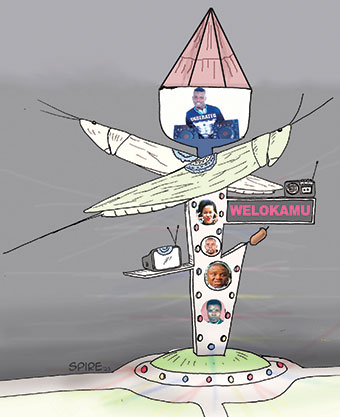
Those offended creep along sporadic lines that Masaka is known for grasshoppers and other petty things. Whenever someone comes across something unusual, for instance, a pimped or decorated vehicle, they conclude that “there goes another Munnabuddu!”
The jokes peaked at the climax of the Masaza football tournament recently, when hordes of football fans from Masaka sub-region poured into Kampala with signature pomp. For the uninitiated, the famous Lwera wetland welcomes you to greater Masaka through the Lukaya road toll market in the present-day Kalungu district.
But traditionally, our entry point goes by its signature name, “Ku Welokamu” (welcome to Masaka) at the first Total/Takeaway roundabout. When we talk about Masaka, we refer to Nyendo-Mukungwe and Kimaanya-Kabonera, which form the City, then Kyanamukaaka, Kyesiiga, Buwunga and Bukakata for the rural area.
But greater Masaka comprises Kalungu, Bukomansimbi, Lwengo, Rakai and Kyotera. Buddu as a county brings us all together. From a religious angle, the Catholic Masaka diocese on top of the aforementioned regions covers Rakai, Ssembabule, Lyantonde and the Sese/Kalangala islands.
Like some regions of Ugandans that have been retarded as a result of war, Masaka too was bombarded by artillery during the wars that ousted both Idi Amin and Gen Tito Okello, whose effects extended beyond deaths and led to destruction of infrastructure.
Those tumultuous days notwithstanding, up to now, there have been deliberate efforts to pull us down including unpaved roads, budget cuts, and the effect of the Masaka-Mbarara bypass, among others.
The Nyendo- Masaka road has been unmotorable for several years and many had to avoid that route, which obviously affected business growth in the Nyendo – Nakayiba corridor. Nakayiba, also known and popularized as Benghazi by Hon Mathias Mpuuga during the walk-to-work protests, is the Kisekka market of Masaka.
It is through this route that you also access Kitovu, the seat of the Masaka Diocesan Ordinary Serverus Jjumba.
PRIDE OF CULTURE
Our people have had a very strong attachment to the Buganda Kingdom, which is why they presented the beautiful and scenic Nkoni Palace to Ssekabaka Muteesa II soon after his return from exile in 1955. We have produced Katikkiros for the
kingdom, including Joash Mayanja Nkangi, Joseph Mulwanyammuli Ssemogerere and Charles Peter Mayiga.
We still treasure the role played by Bishop Adrian K. Ddungu during Kabaka Mutebi’s coronation at Naggalabi in 1993. No wonder, Pookino Jude Muleke, an ex-seminarian and the youngest county chief in Buddu’s history, has mobilized us with ease. I met Jude Muleke in S6 at Bukalasa Seminary.
He commanded a lot of respect even then, having served as assistant head prefect. He has aggressively handled the sensitive renovation of the historical Buddukirohouse, sustained the clean-up campaigns and above all, not compromised on education, health, farming, sports to mention the least.
Besides the sing-song pronunciation of “taata” and “maama” (father and mother) unique to Masaka people, I guess at one point or the other, every man has been advised that Masaka is the home to good spouses that remain cultured, firm and
hardworking in the face of adversity.
Masaka has for centuries been famous for its fertile soils, coffee/matooke production, and hardworking people. The Masaka Union, Masaka District Farmers’ Association, among others, inspired many to engage in productive farming. We had several
TATA trucks branded with “Grow More Coffee” and “For Export”. All this was for cash crops, which are currently facing challenges, but our people remain focused.
All the jokes about Buddu aside, our people produce the finest pineapples. They contributed a lot to the now obsolete Creps Soda factory in Kyabakuza. To date, sweet bananas, avocado, guavas, etc from Masaka have a unique taste.
CRADLE OF CATHOLICISM
Masaka as a religious cradle received Fr Laudel Simeon Mapel and Br Amans Delmas in 1879 when they made a stopover at Bugoma islands enroute Kigungu. Later, we produced not only three Uganda Martyrs; Karoli Lwanga of Birinzi, Bruno Sserunkuuma of Ssaza and Yoana Maria Muzeeyi of Minziiro, but also the first indigenous priests; Msgr Victor Mukasa and Fr Bazilio Lumu during the days of Bishop Streicher (Stenseera, as we refer to him).
We have the cathedra of the first native African Bishop Joseph Kiwanuka, institutions of academic excellence including Bukalasa, the oldest seminary in sub-Saharan Africa, which also pioneered modern secondary school education in Uganda and East Africa, and Katigondo National Major Seminary.
These are compounded by the formation centres; Sacred Heart Kiteredde for the Bannakalori Brothers and the Daughters of Mary at Bwanda and St Padre Pio’s Shrine at Misaali. So, don’t be amused by the works of Msgr Aloysious Ngobya and Sr Amedeo Byabali, or Br Fr Anatoli Wasswa who redefined traditional African medicine.
You need to spare time and visit Emmanuel Cardinal Wamala’s Museum at Kaamaggwa in order to appreciate more about these chronicles. We have other institutions such as St Henry’s College Kitovu, Masaka Secondary, St Charles Lwanga-Kasasa, St Bernard’s College Kiswera, etc, which have had a positive punctuation both in academic excellence and shaping sports inthe country.
The Uganda Technical College (now Muteesa I Royal University) contributed enormously to vocational training; Kabukunge Core PTC and Ndegeya PTC produced the best primary school teachers. Our sisters have been trained through St Theresa SS Bwanda, Christ the King Bulinda,Bukulula Girls and Kalungu GTC; countless nurses have gone through Villa Maria, Masaka and Kitovu Nursing Schools.

At primary level, even the public schools including Hillroad, St Paul Kitovu and Binyonyi Public School, among others, produced several torchbearers. Now, motorsport in Uganda is incomplete without Masaka Recreation Grounds, or “Liiku” to us, Bannabuddu; the old Bukakata road, Ssenyange, Misaali, Kasana have also enormously contributed to motorsport.
I consider my hometown Nyendo as the best when it comes to bustling with business ideas. The grasshoppers have always been packed in gunny bags from Nyendo and spread to the entire country during the seasons.
Nyendo has been the centre of gambling (ani akalengedde?). I am partly convinced that the first people to ply merchandise from door to door (hawkers) were from Nyendo, as were a plethora of roadside businesses including frying lungfish (emamba), prostitutes, among others.
At one time Nyendo had a ‘popular’ lunatic called Muniina, who on several occasions turned up looking slightly groomed and walked along Kitovu road announcing that he was returning from Kampala. Muniina brings me to our mode of transportation.
The story of mass public transport in Uganda is incomplete without Kamul’s defunct GASO buses, Uganda’s introduction to ‘coaches’ as we know buses today. Actually, there are those who thought every bus was a GASO. Do you remember the fast Peugeot 504 and 505, which were mostly used by businessmen and the surviving 1956 Packard, which plies the Masaka-Lukaya route with Abdul Tamale behind the wheel.
This reminds me of a friend who bought a Toyota Progress and he recklessly honked around Nyendo; before he knew it, several passengers had grabbed the handles to open doors and they were shocked to find the car locked. Well, in Masaka, any car can be a taxi.
From Toyota Corolla, Toyota Ipsum to Toyota Noah or Premio, you will be shocked by how many people can cram themselves into these cars.
ENTERTAINMENT CHIEFS
The entertainment industry has greatly been boosted by us, because we take the party memo quite seriously. Music legends including Joseph Kyagambiddwa, Christopher Ssebadduka, Herman Basudde have always inspired many budding musicians.
Great authors like MB Nsimbi and Fr FX Mbaziira have also inspired the Jimmy Spire Ssentongos of today. We have had entertainment halls like Patel Shamji, Mwami Cinema, Falkland, pubs like Safari and Centenary, and recently, the branches of Club Ambiance from Masaka have invaded Kampala and beyond.
Besides, the festive season is incomplete without Nabugabo beach making headlines on Boxing day and Easter Monday. The video jockeys of today acquired such skills from Masaka’s Bakyayita and Byekwaso, who used to do a live translation of movies in Kitaka and Kakyafu.

In terms of neighbourhood planning, Masaka was initially a well-planned city with precincts like Kizungu, Soweto, Mutuba and Musisi gardens for a particular class only compared to Kololo in Kampala. Well-designed streets including Elgin offered certain high-end businesses and Hobart avenue for wholesalers.
By the time we studied about supermarkets in Commerce, the term meant Madfa in Masaka, but many have opened up since then. The term Bookshop meant Ssendikwanawa, and Hotel referred to Lanova. As we wait for traffic lights, we embrace where we come from, take pride in our flamboyance, and we are not about to accept being demoralized by our detractors.
We revere Masaka as the cradle for leaders, having produced Uganda’s first prime minister Benedicto Kiwanuka – also the third president of the Democratic Party. The greater Masaka with Ssese, gave you John Kawanga, former Mayor Gerald Ssemogerere and Mzee Andronico, among others.
The region continues to serve humanity with personalities such as the Cardinal, Katikkiro, Mpuuga, Lord Mayor Erias Lukwago, businessmen like Bulaimu Muwanga Kibirige (BMK), among others.
As a student of sociology and considering the sociological relativism of pride, it is, therefore, erroneous to conclude that those from Masaka or Buddu suffer from ‘arrivalism’, are arrogant, etc.
We are simply proud of who we are; that is why we have pushed ourselves past our threshold vanity to what others think about us.
Source: The Observer
Share this content: