
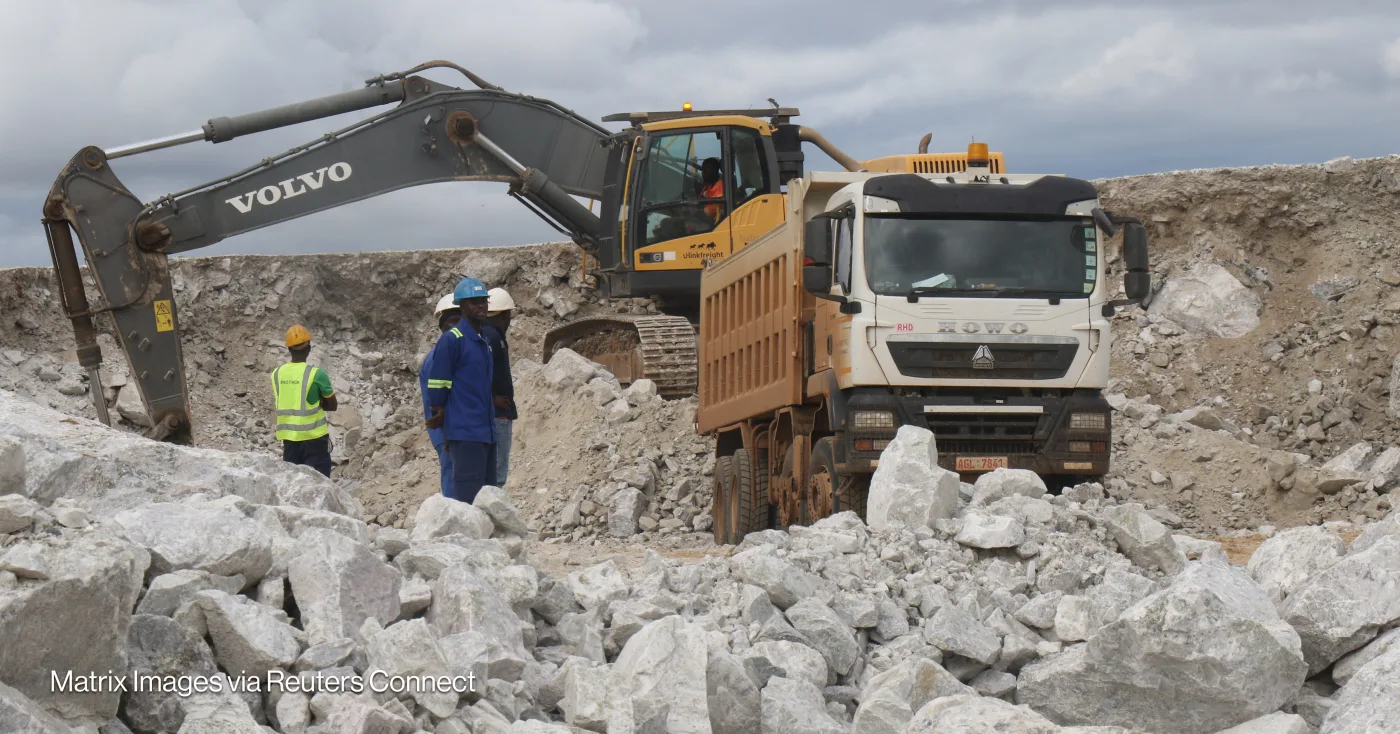
- Naming the US-led Frontier Minerals Consortium as preferred bidder puts Kwale County’s prized rare-earth and niobium deposit back on the global radar—but turning a tender notice into a financed, locally refined mine will test Kenya’s regulatory, fiscal, and social discipline.
By Adrian Munji
Kenya’s selection of a US-led consortium for the Mrima Hill rare-earth and niobium project in Kwale County is a significant milestone in the country’s push to draw global capital into its critical minerals sector. Announced by Mining Cabinet Secretary Hassan Ali Joho on 19 November 2026, the decision names the Frontier Minerals Consortium—bringing together project vehicle Frontier Minerals LLC, Bunker Hill Mining Corp., ReElement Technologies, and American Resources Corporation—as the preferred bidder for a deposit rich in minerals vital to clean energy technologies, electronics, defence, and advanced manufacturing.
Yet selecting an investor and building a commercially viable mine are two very different achievements. For Kenya, the real test begins now: turning a tender outcome into a properly financed, bankable project that delivers lasting economic value rather than another stalled resource headline.
A tender award is a starting line, not a green light
Following an international competitive tender, the government issued a Notice of Intention to Award the Mrima Hill project to Frontier Minerals. Understanding what that notice actually confers is critical. It does not authorise the consortium to begin mining. Before prospecting and exploration can advance, the group must negotiate and secure statutory licences under the Mining Act, obtain community consents, and satisfy environmental and regulatory approvals.
Those requirements reflect a basic reality of extractive development: mining involves far more than digging ore out of the ground. It demands years of upfront capital across geological exploration, infrastructure, processing facilities, environmental management, and specialised talent. The government’s tender evaluation rightly weighed financial capacity, exploration commitments, local processing plans, environmental restoration, biodiversity management, and cultural heritage protection. Now those bid commitments have to survive execution.
Read also: In Kenya’s Mrima Hill, a test case for Trump’s Africa critical minerals strategy unfolds
Mineral wealth is not the same as an investable project
One of the most common mistakes in evaluating natural resource opportunities is assuming that valuable minerals underground automatically create an attractive investment. A deposit becomes commercially viable only when technical and financial studies prove it can be extracted, processed, and sold at a competitive return.
Reaching that threshold requires extensive drilling, metallurgical testing, engineering studies, reliable cost estimates, and realistic market demand assumptions. At Mrima Hill, feasibility work will be decisive in establishing how the rare earths and niobium can be recovered, what processing infrastructure is required, and whether local refining can operate economically. Because mining requires heavy upfront capital years before first revenue, investors face acute exposure to construction overruns, commodity price cycles, and permitting delays. Winning the tender creates an option to develop; it does not prove the project is already bankable.
| THE INVESTOR TAKEAWAY
Winning a competitive tender creates an option to develop—it does not prove that a deposit can be extracted, locally refined, and sold at a commercial return. |
Local value addition and state participation need hard economics behind them
One of the most ambitious promises attached to Mrima Hill is the plan to establish mineral processing and refining capacity inside Kenya. Capturing value onshore can generate far broader economic gains than exporting raw concentrate—supporting skilled employment, technical expertise, local supplier chains, and stronger domestic industrial capacity.
However, local beneficiation only succeeds when the underlying economics and infrastructure align. Refining facilities depend on reliable power and water, transport corridors, specialised skills, and secure off-take markets, and the value added must justify the additional capital outlay. While the consortium combines mining, separation, and refining capabilities—and Bunker Hill has indicated that the group is pursuing potential US government funding—potential support is not the same as committed project finance.
At the same time, under Kenya’s Mining Act framework for strategic minerals, the state is positioned to secure a 10% free-carried interest in large-scale operations. Kenya will therefore need clear visibility on how capital is structured across each phase, how risks are shared, and whether local refining can compete on commercial terms rather than exist merely to satisfy a policy condition.
Read also: U.S.-backed consortium wins tender to extract critical minerals in Kenya’s Mrima Hill
Community confidence is a core financial variable
The financial case for Mrima Hill cannot be separated from its environmental and social responsibilities. Located in an ecologically and culturally sensitive area—with Reuters reporting concerns surrounding the site’s sacred forest status to the Digo community and potential local opposition—the project demands genuine consultation rather than box-ticking compliance.
For investors, unresolved community disputes translate directly into delays, legal challenges, higher financing costs, and operational uncertainty. For host communities, weak consultation risks leaving residents with the environmental footprint of development without a fair share of its benefits. A commercially durable project must earn its social licence from the outset—protecting biodiversity and cultural heritage while setting transparent terms for local employment, infrastructure, and benefit sharing.
What Kenya should measure next
Selecting the Frontier Minerals Consortium is a meaningful first step, but policy discipline now depends on tracking measurable progress. Investors and the public should watch whether the consortium secures its prospecting and statutory licences on schedule, completes rigorous exploration and bankable feasibility work, locks in committed financing, and demonstrates that onshore refining is economically viable alongside strong environmental and community safeguards.
Kenya has a genuine opportunity to make Mrima Hill a model for how strategic mineral resources can attract global capital while building domestic industrial capability. Ultimately, though, success will not be measured by tender announcements or headline estimates of mineral wealth underground. It will be measured by whether those resources become a commercially viable, responsibly run enterprise that builds local capacity and leaves lasting economic value behind.
Analysis by Adrian Munji, an International Business Administration student specializing in Finance at USIU-Africa. You can view some of my work here:
Medium: https://medium.com/@munjiadrian
LinkedIn: https://linkedin.com/in/adrian-munji-a82765247
Sources: Ministry of Mining, Blue Economy and Maritime Affairs tender announcement (19 November 2026); Kenya News Agency (19 November 2026); Reuters (19 November 2026); Frontier Minerals Consortium / Bunker Hill Mining Corp. announcement (20 November 2026); Mining Act, 2016 (State Participation provisions).

Leave a Reply