
Artificial intelligence is usually described as a software revolution. It is also, and for Africa more consequentially, an infrastructure revolution. The share of AI’s value that accrues to this continent will depend far less on how enthusiastically we adopt the technology, we will adopt it, than on how much of the infrastructure beneath it we own, operate and finance. Accelerated compute now belongs in the same category as energy, ports, railways and broadband: productive infrastructure, and therefore an economic-development question rather than a technology question.
Africa’s historical disadvantage has been less an inability to innovate than an inability to institutionalise and industrialise innovation at sufficient scale and for sufficient duration. Correcting that in the AI era requires four groups moving together: governments to create the enabling environment; the African Union to stop Africa’s AI economy fragmenting into 54 incompatible regimes; African development-finance institutions to treat AI compute as financeable productive infrastructure; and African companies to invest, build and operate. At Cassava Technologies, we are doing the fourth, building AI factories on top of the fibre and data-centre infrastructure we have spent more than two decades putting in the ground. We cannot do the other three, and no single company can do this alone.
This is not a technology story. It is an everything story.
The world is still in the early days of AI. That is precisely why the decisions taken now matter. But it is already clear that this is not a sector, it is a general-purpose capability that will reach into every sector, and in Africa it lands directly on problems we have been trying to solve for decades:
- Agriculture – yield forecasting, pest and disease detection, input and irrigation optimisation, and weather risk for smallholder farmers.
- Education – personalised learning and teacher support in systems under severe teacher shortages.
- Healthcare – diagnostic support, triage and epidemic surveillance in systems with acute specialist shortages.
- Financial services – credit assessment for people and businesses with no formal credit history.
- Retail and consumer markets – demand forecasting, pricing and supply chains across largely informal distribution.
- Mining and resources – geological interpretation, predictive maintenance, productivity and safety.
- Government – digital public services that are responsive, ubiquitous and cheaper to deliver.
The African Development Bank has estimated that effective adoption of AI could add as much as $1 trillion to Africa’s GDP by 2035. Estimates over that horizon are necessarily uncertain. The direction of travel is not. And every one of those applications consumes compute, which raises the only question that really matters: where will that compute sit, and who will own it?
Africa has never lacked capability. It has lacked institutions.
Our technological history did not begin with mobile telephones in the late 1990s. By the 12th and 13th centuries, Timbuktu had become an intellectual centre whose surviving manuscript traditions encompass mathematics, astronomy and medicine alongside theology and law. The dry-stone structures of Great Zimbabwe required engineering knowledge, economic organisation and the ability to mobilise people and materials at scale. In the modern era, Egyptian-born Mohamed Atalla’s work with Dawon Kahng at Bell Labs produced the MOSFET, one of the foundational building blocks of modern digital electronics. Ghana’s Francis Allotey and Nii Quaynor, Ethiopia’s Aklilu Lemma and David Blackwell, after whom NVIDIA named its Blackwell GPU, belong to the same tradition.
So why did so much demonstrated capability never translate into enduring technological power on the continent? Because James Watt did not create the Industrial Revolution by himself. Britain built an ecosystem around its inventors: scientific institutions, banks, manufacturers, property rights, transport, expanding markets and pools of capital. The United States did not produce the information revolution simply because it produced brilliant engineers; it produced Bell Labs, DARPA, deep capital markets, government procurement and venture capital. Innovation became institutional, and because it became institutional, it became scalable. Africa entered from a different starting point: colonial infrastructure designed to move commodities to ports rather than integrate domestic economies, universities without sustained research funding, shallow capital markets, unreliable power and fragmented national markets.
Talent can be individual. Technological power is institutional. Innovation as an event is not enough. Africa must build innovation as a system.
Compute is now a factor of production
Mobile telephony showed what happens when infrastructure, capital, entrepreneurship and demand converge. Mobile money, EcoCash, M-PESA, MoMo, built models so well suited to local conditions that other regions began studying them. But Africa did not truly “leapfrog infrastructure”; mobile required spectrum, towers, fibre, power, distribution and billions of dollars of investment. AI asks considerably more of us.
An AI answer appears in seconds and feels weightless. Beneath it sits a physical industrial system, and the AI economy can be simplified into a seven-layer stack: energy → connectivity → data centres → compute → cloud → models → applications.
A university without sufficient compute will struggle to conduct frontier research. A start-up without affordable compute is structurally disadvantaged against competitors where it is readily available. A government cannot deploy secure, ubiquitous digital public services without it. Nor can a bank, a mine, a hospital or a manufacturer deploy AI at meaningful scale.
The strategic logic is straightforward. Fibre connects intelligence. Data centres house it. Compute processes it. Cloud distributes it. Cybersecurity protects it. And reliable, increasingly renewable energy powers the entire system. Our ambition is to bring these capabilities together into the largest digital infrastructure and AI compute platform serving Africa and other emerging markets. We are not starting from a blank sheet of paper, and we cannot finish alone.
A compact for Africa’s AI economy
What Africa now needs is a compact between four groups:
- Governments – reliable power, sensible regulation, faster permitting, predictable cloud and data frameworks, technical education, anchor demand, and investment in the safety infrastructure that sustains public trust in AI.
- The African Union – continental coordination, so that AI is not treated as 54 separate national challenges, reinforced by the African Continental Free Trade Area.
- African development-finance institutions – the African Development Bank, Afreximbank, TDB, Africa Finance Corporation, DBSA and others deploying long-tenor project finance, guarantees and credit enhancements to de-risk AI compute infrastructure and crowd global institutional capital in.
- Africa’s private sector – invest capital, operate world-class infrastructure, develop talent, form global partnerships and compete commercially.
Global technology companies and international investors should be deeply involved. Africa does not need technological isolation; Timbuktu prospered precisely because it was connected to wider commercial and intellectual networks. The question is not whether we should work with NVIDIA, Microsoft, Google and the world’s other technology leaders. Of course we should, and we already do. The more important question is what those partnerships build in Africa. Do they develop African talent? Do they create African infrastructure? Do they strengthen African universities? Do they enable African entrepreneurs? Do they increase the productive capacity of African economies? That should be the test.
Read also: Why the Future of Customs is Agentic Artificial Intelligence
From Timbuktu to AI
Nine centuries ago, trade routes moved goods and scholarly networks moved ideas; libraries preserved knowledge and institutions developed people capable of extending it. Today fibre networks move data, data centres store it, AI factories process it, and cloud platforms distribute computing capability. The technologies have changed beyond recognition. The underlying economic principle has not: knowledge becomes powerful when societies build the infrastructure and institutions that allow it to compound.
Africa will consume AI. It should. We will use models developed elsewhere. We should. We will partner with the world’s most sophisticated technology companies. We must. But Africa must also own and operate a meaningful share of the infrastructure on which its AI economy runs: energy, fibre, data centres, cloud, cybersecurity and now accelerated compute.
We cannot predict what the next generation of African scientists, engineers and entrepreneurs will create when abundant computing capability becomes available to them. That is precisely my point. Our responsibility is not to predict or control what they will build. It is to make sure they have the infrastructure and platforms on which to build it.
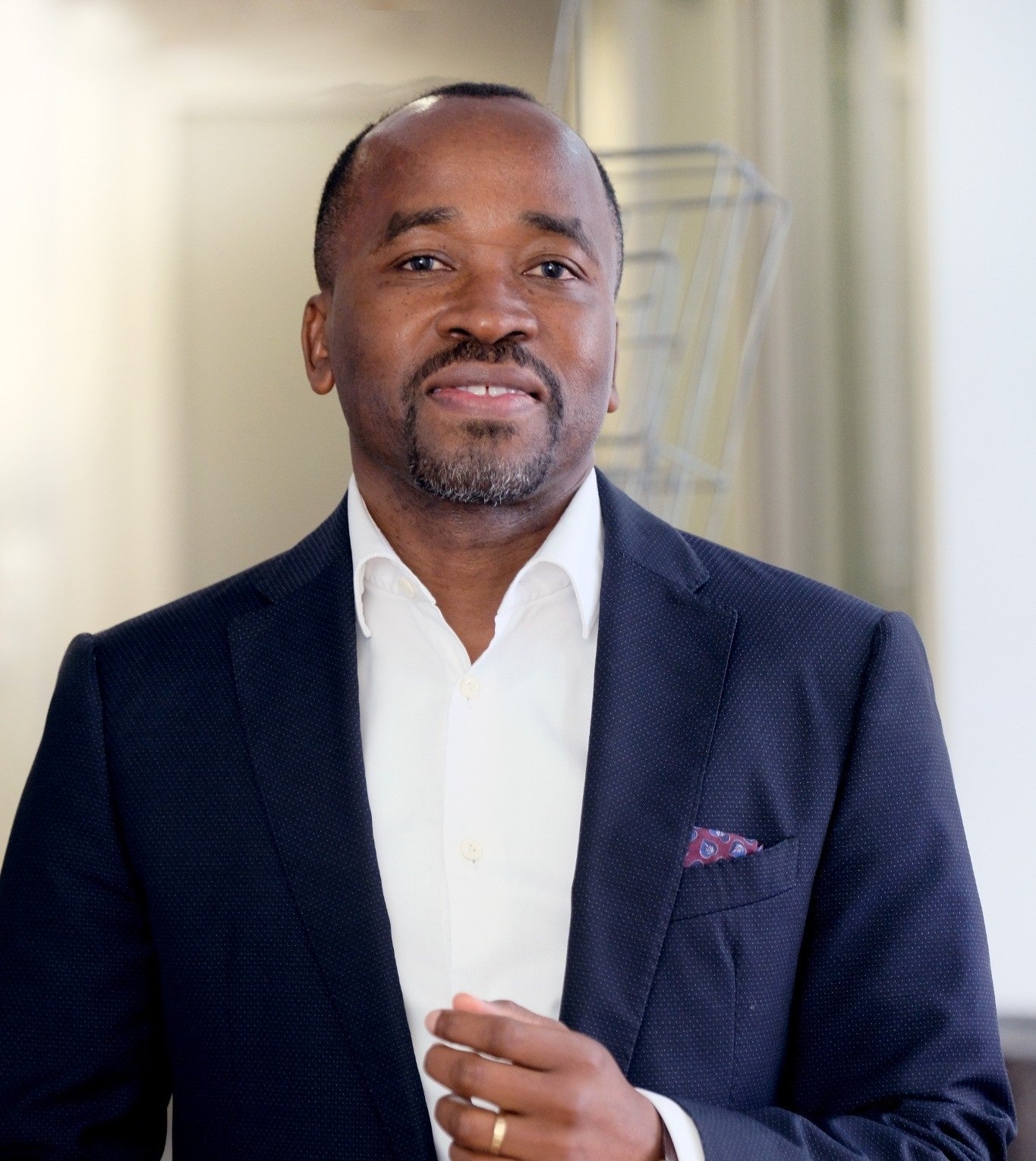
Insights by By Hardy Pemhiwa, President & Group CEO, Cassava Technologies

Leave a Reply