
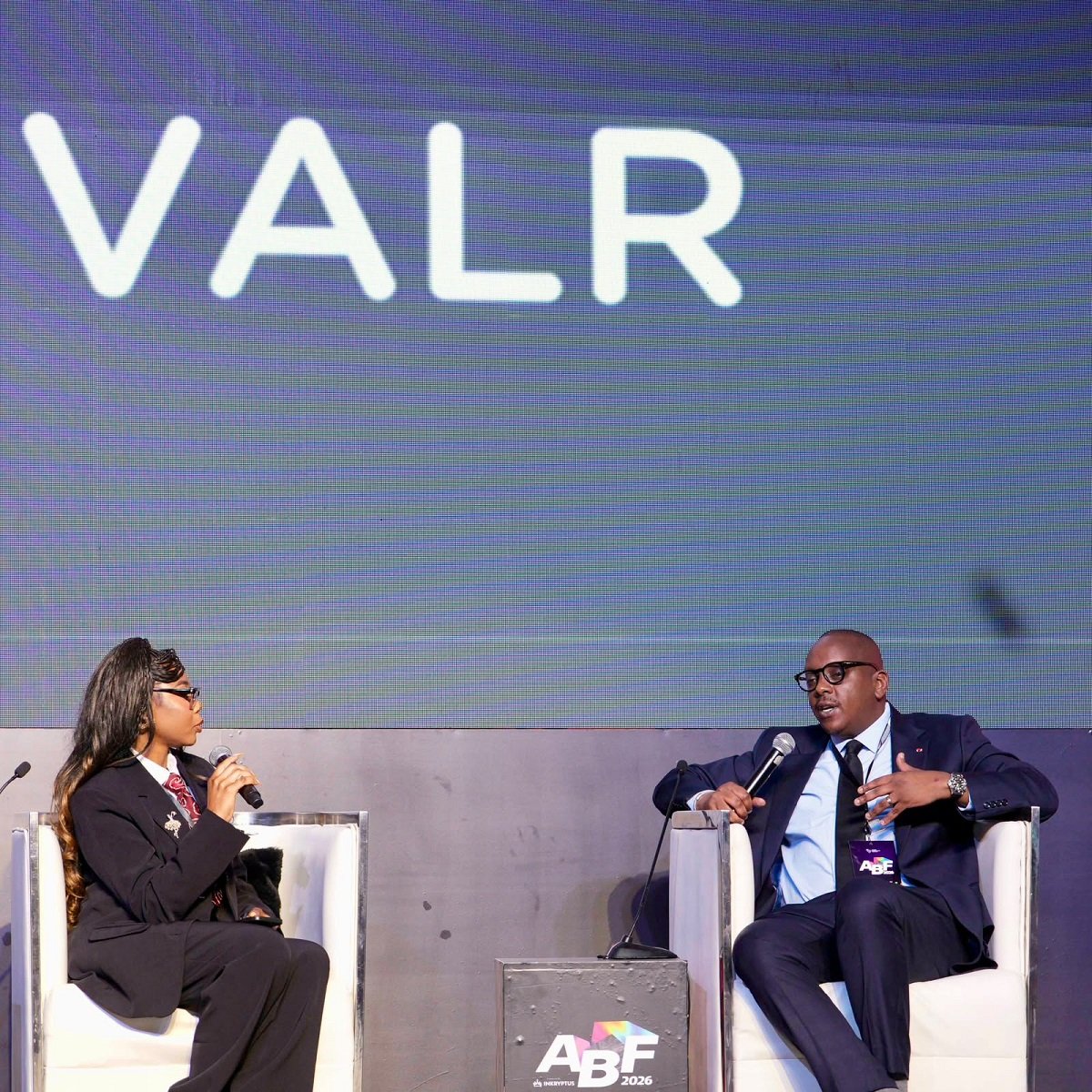
On Thursday last week, I joined a fireside chat on the main stage at the Africa Blockchain Festival 2026 in Nairobi, moderated by Nicole Jamu, to talk about continental regulatory harmonization. The session title said it all: One Market, Fifty-Four Rulebooks.
The festival theme, “Capital, Code, and Continuity: Building Africa’s Permanent Digital Economy,” is the right ambition. But I came to the stage as a peace and security practitioner, and my message was that none of it lasts unless we get the foundations right. Here is what I shared.
1. Know your environment
Before we write a single rulebook, we have to understand the ground we are building on. Everyone in this room, whether in finance, technology, law or policy, should be able to talk about peace and security from their own lens. Investors read risk. Regulators read stability. Founders read trust. If you do not understand the peace and security landscape you operate in, you are building blind.
2. Solidarity as Africans
Harmonization is not only a technical exercise. It is a political and human one. Sharing best practices across borders, learning from each other’s successes and setbacks, and standing together as Africans is what turns fifty-four separate frameworks into something that can function as one market.
3. Know the gap between our ambitions and our reality
We are good at ambition. We are less good at looking honestly at the contradictions. We speak of a single continental market while businesses, goods and people still meet barriers at every border. Naming that gap is not pessimism. It is the starting point for closing it.
4. Be disciplined in the rollout
We sit, we talk, we sign, we communicate. Then comes the rollout, and that is where discipline is tested. We cannot celebrate integration in the conference hall while afrophobia and xenophobia undermine it in our streets and at our borders. Hostility toward fellow Africans is finishing us. A market cannot be built on people who do not feel safe or welcome in it.
5. The crisis of the state
Many of our states are under strain, and we have to stop being myopic about it. Short-term thinking and narrow national interest will not carry us through. We need to embrace the hard walk ahead: building institutions that can protect citizens, enforce agreements and earn trust, because a digital economy is only as strong as the state that underpins it.
Read also: AI’s Dual Capacity and a Strategic Opportunity for African Peace and Security
Why this matters for AI and blockchain
Intelligent systems and blockchain networks are only as trustworthy as the environment they operate in. In stable, well-governed states, they can strengthen transparency and trust. In fragile ones, they can be captured, weaponised or simply fail when institutions cannot enforce the rules around them. That is why the peace and security conversation cannot sit apart from the technology conversation.
Building on stable ground
Africa does not lack innovation or entrepreneurial talent. What we need is greater access to capital, stronger regulatory frameworks, meaningful partnerships, and platforms that connect African entrepreneurs with global opportunities. But capital will not flow, and code will not scale, where there is instability and mistrust. Continuity depends on peace and security.
The conversation must now move from blockchain’s potential to what we can build, finance and make on the continent, safely and together. Harmonizing fifty-four rulebooks is a worthy goal. Let us make sure we are harmonizing the people and the peace beneath them first.
The author, Amb Frederic Gateretse Ngoga, is Senior Regional Peace and Security Expert and Former Head of the Early Warning and Conflict Prevention Division, African Union Commission.

Leave a Reply