
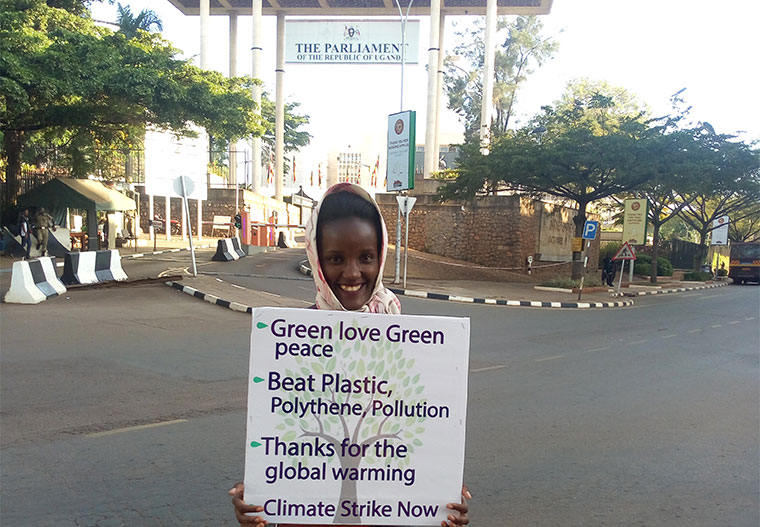
Last year, global warming reached its worst levels, recording 1.2 degrees Celsius above pre-industrial levels.
In the same year, the world witnessed record-breaking multibillion dollar deals in energy sector especially in the global North. Global oil and gas mergers and acquisitions activity topped $350 billion in 2023, outpacing the 2022’s total by 83 percent, the highest level in the past five years (Dealogic Data).
Admitting the enormous challenge at hand, the International Energy Agency (IEA), recently noted that for decades, the share of fossil fuels in the global mix remained extremely high, around 80 per cent, but fell short of directing ‘super’ global polluters to reduce emissions to acceptable levels or begin paying for their ‘sins’ through carbon credits and taxes.
In Africa, where for centuries, costly imperial covert operations that curtailed and stifled continental efforts to exploit and develop her natural resources are currently exploiting climate crisis, to ensure fossil fuels remain idle.
As Western government functionaries such as legislators, multilateral lending financial institutions, law firms, and CSOs gang against investments in the $20bn East African Crude Pipeline (EACOP), Canada, which is the fourth world’s oil producer, in its wide bid to export oil beyond USA, is soon celebrating the completion of a multipurpose 1,150km Trans Mountain Pipeline worth $23bn.
Africa, which emits less than five per cent of the total global harmful greenhouse emissions, is being gagged not to exploit its fossil oils so that high unemployment rates, income inequalities, trade and budget deficits, currency fluctuations, low rates of tax-to -GDP, high debt burden, poverty levels, high rates of donor dependency and energy deficits remain unchanged.
According to IEA, close to 750 million Africans live without access to electricity and clean cooking energy. It is also worth noting that the majority shareholders in the EACOP are facing several lawsuits (both civil and criminal) in domestic, East African, and European judicial courts brought largely by foreign parties to stop foreign investors.
Endorsed amid court battles and protests from environmentalists, Canadian multipurpose infrastructure is designed to transport 890,000 barrels of oil per day, compared to our regional EACOP, which is meant to transport 246,000 bbls/day of Uganda’s crude oil for a distance of 1,443km from Kabaale, Hoima in Uganda to the Chongoleani peninsula near Tanga port in Tanzania.
Fighting to break the dominance of China and Russia on rare earths minerals, Norway becomes the first country in the world to approve commercial-scale deep-sea mining to extract minerals from the seabed amidst protests from environmentalists and scientists who condemned the move, labeling it unprecedented and extremely destructive, likely to send terrible signals to the rest of the world
Germany, whose total energy subsidy reached Euros 290 billion in 2022, recently abandoned the planned oil subsidy cuts for farmers following the two-week protests.
Such a decision from government whose representative in EU parliament has been central in fighting oil developments in Africa is a huge embarrassment not only to Western governments but also to their multilateral and multifaceted lending financial institutions such as World Bank and IMF, which have severally pressured African countries such as Ghana, Angola, Nigeria, Kenya and many others, to cut oil subsidies without appreciating its net effect on inflation and cost of living.
In Kenya, oil subsidies were reinstated after violent protests that caused deaths. In Nigeria, protests caused unrest and are still ongoing since late last year. Responding to Western indifference towards a crisis, other major economic heavy weights in Asia and Middle East are slowly developing similar approaches.
Despite being the biggest investor in renewable – solar energy and wind turbines – China remains the biggest builder of coal power plants, and is responsible for the construction of 96 per cent of all coal power plants in 2023 (Bloomberg).
United Arab Emirates (UAE), the host of Cop 28, left climate activists enraged when it announced shortly before the climate conference that it will continue to produce oil at the same rate as long as the world demands it (UN COP28).
Saudi’ state oil giant, Aramco, in a twist of things, halted its plans to increase production capacity from 12 million barrels of oil per day to 13 million barrels of oil per day but at the same time it is investing $10bn into South African Richards Bay refinery with capacity to produce 300 million barrels of oil per day.
Like American farmers (USA TODAY’s) once asked: does this climate crisis exist or it is a hoax? And if it does exist, why is it that countries most affected by deadly weather calamities like extreme cold weather, strong hurricanes, cyclones, severe cloud bursts, storms, droughts, large wildfires, landslides, pollution, continue to undermine renewable energy sources earmarked as replacement of fossil fuels?
“It is important to reduce carbon emissions to preserve the planet, but oil and natural gas should not be demonized in the medium-term,” Elon Musk, the founder of electric car maker Tesla, said during COP28 conference.
The author is a pan-Africanist researcher and executive director, Safety Watch Initiatives Africa
Source: The Observer
Share this content: