
Although it is not uncommon to support people facing calamities with relief items such as food, clothing and shelter, it shouldn’t be the modus operandi all the time.
After the storm has calmed down, people affected by natural and even man-made disasters should instead be helped to rise again. If we continue feeding them, they will become too comfortable to put in the hard work necessary for their development. It is not sustainable too.
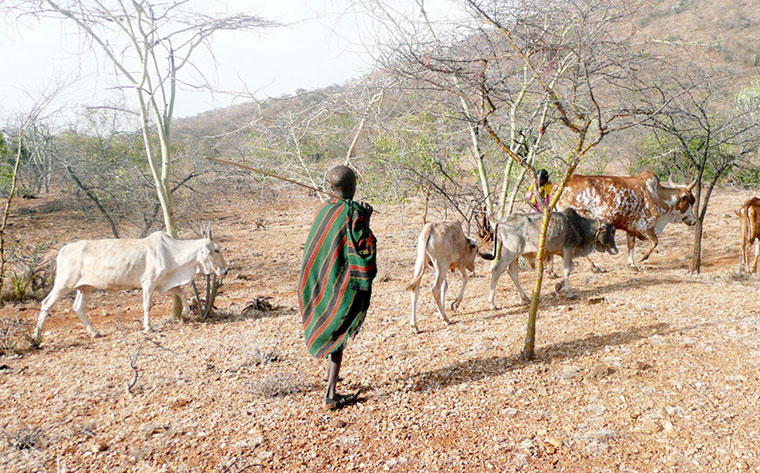
Karamoja has been a story of relief for as long as Uganda has existed despite its massive potential in animal husbandry and, of recent, mineral exploration. With large swatches of land, and a culture around cattle-keeping or pastoralism, how can people in the area be helped to move from holding cattle for bragging rights into a commercial activity? The world has never been short of demand for beef and other animal byproducts.
However, it seems we have always looked at Karamoja as a place that deserves pity hence the massive plan to donate cheap iron sheets that we hear didn’t even reach those who needed them. A 28-gauge galvanized iron sheet on average costs Shs 30,000 which is approximately $8 and if a family was to get 10 sheets, that would still be less than the price of an emaciated calf.
But like the popular Chinese proverb urges, you need to teach people how to fish instead of giving them fish. If we are giving Karamoja people iron sheets, we are denying them an opportunity to shift into decent and meaningful work that is sustainable.
If anyone wants to build an iron sheet roofed house, how can they be enabled to afford it on their own? The idea is to empower them and introduce animal husbandry that is geared at turning a profit. That way, they can sell some of their cows and don’t necessarily have to raid a neighbour’s and with some profit made, they can be able to build these houses on their own.
Milk could be another area that can enable people in Karamoja get decent sustainable incomes. Cows in whatever form produce some bit of milk which the farmers or pastoralists can be able to sell and get sustainable income.
In the western Uganda, government and some development partners have supported the installation of milk coolers in every single trading centre. What farmers now do is to deliver the milk every morning to a trading centre where a cooler has been installed. The farmers formed associations and Saccos that own the coolers.
So, once they got themselves into these associations, development partners such as Agricultural Business Initiative (aBi) offered farmers grants where they only paid back 50 percent and fully owned the cooler.
A cooler came with a standby generator and a lab kit to test that the milk being delivered is of the required quality. Farmers also got aluminum cans to transport the milk. That has significantly changed the fortunes of farmers in western Uganda.
People no longer move long distances to transport milk to major towns such as Mbarara where many times they would find coolers full to capacity hence pouring the milk. If you heard that milk flows in Mbarara, it was because of lack of cooling capacity.
Today, there is no milk being poured on the streets of Mbarara because of these coolers. Milk factories and indeed some traders simply pick from these cooling centres. Farmers are paid every month by their SACCOs.
But these SACCOs have gone ahead and expanded, creating credit and even food facilities. A farmer who needs money simply gets a low- interest loan from the SACCO where they supply milk and then the money is deducted at the end of the month.
Also, the SACCOs have established drug shops and food stores. A farmer who wants rice or salt simply gets it from the shop and money is deducted at the end of the month. Some of these groups like Abesigika and the one in Ntungamo collect thousands of litres of milk per day. To ensure they get more from every litre, many SACCOs have bought their own trucks so they transport the milk to the factories.
In areas like Rushere, SACCO managers told me that even banks like Uganda Development Banks enable them borrow billions of shillings collectively to improve their farms with water and pasture.
Women who were previously excluded from the milk industry are now involved with many forming additional groupings to make ghee, yoghurt, butter and such other things from their milk. Nobody, I believe, in western Uganda needs a few iron sheets to roof their houses. What is so difficult in replicating this model in Karamoja?
djjuuko@gmail.com
The writer is a communication and visibility consultant
Source: The Observer
Share this content: