
In a sobering piece published in this newspaper last week, Dr Danson Kahyana, expressed deep-felt worries — arguably representing many colleagues — about what it means to have Museveni’s son in law, Edwin Karugire, as the chair of the university’s appointments board.
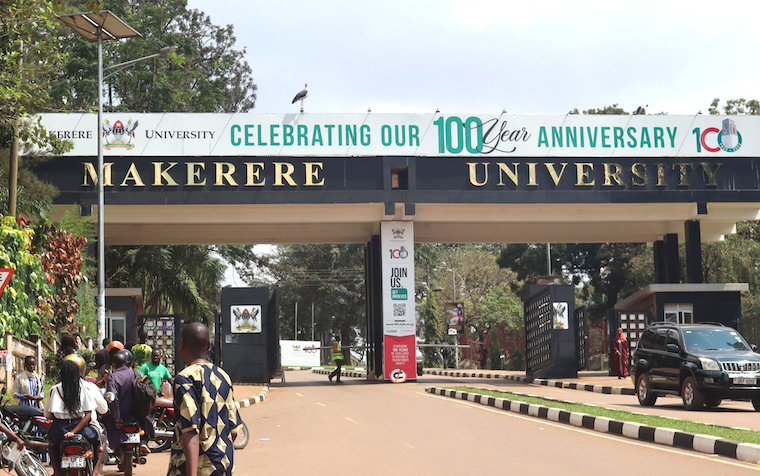
In an earlier piece, I argued that Edwin Karugire was an extension of the concrete wall that has already grown around the university. Our fears and sentiments are real, and indeed, as we speak now, Makerere has already evolved into a contained and heavily securitised space.
In all fairness, Dr Kahyana was being only rhetorical. The worries he futuristically expressed have been happening for the past five years. Elderly scholars, especially those nearing retirement, but would benefit from contract extensions— especially since Makerere is actually understaffed—have been forced into childlike passiveness on all matters.
They can neither comment on national issues of governance, nor structural issues of the university itself. Because folks running Makerere University see themselves as extension of the state—as the Edwin Karugire appointment now succinctly demonstrates. Thus, positions at Makerere have been weaponised (and the space, securitised).
Thus, my teacher, Kahyana, was being just rhetorical and polite.
INTERNATIONALISATION
There is a confusing and saddening encounter I had recently inside Makerere University, which I would like to tell to make this point—of securitisation and containment— more appreciable. But I cannot tell it well without saying a couple of things about myself as a student and scholar at this university.
Working on the Horn of Africa for my PhD did many things for me, including especially “internationalising” me both as a regional and global scholar (I am using these terms rather loosely). Doing fieldwork in Mogadishu and Hargeisa gave me the opportunity to meet and work with scholars from the so-called global north: the UK, Germany, Switzerland, and the United States of America.
Doing fieldwork abroad requires immense funding, and Makerere Institute of Social Reasearch fund was so miniscule for research abroad. This being the case, I spent a great deal of time looking for funding.
Luckily, I won myself three Social Science Research Council (SSRC) fellowships, and one African Humanities Programme (AHP). Besides funding my fieldwork, these fellowships internationalised me and gave me friends and contacts regionally and beyond.
In 2018-2020, when I served as the ‘Emerging Scholars’ Representative’ on the African Studies Association (ASA) Board of North America, I even became more internationalised. Consider also that in its heydays (ca. 2012-2014), my department, Makerere Institute of Social Research (MISR), hosted several international scholars with whom students became friends.
By then, MISR was a hive of activity, bustling with scholars from across the world, and students good at networking used these encounters maximally.
For myself (also true for several other Makerere University staff and students), I became some sort of local reference for scholars and other visitors coming to Uganda, who knew the people I had met.
Thus, I have welcomed and given tours to tens of scholars and visitors —black and white — who would be coming to Uganda for the first time. Of course, as you could guess, I normally take these visitors around Makerere University, a place they would have heard about as “the Harvard of Africa.”
Well, nowadays, there are more ruins to show of what used to be the dream place.
DE-INTERNATIONALISATION, SECURITIZATION
About a month ago, three visitors from Germany who were in Uganda for a longer tourist stay checked on me in that usual fashion where people come with Yusuf Serunkuma as the local reference, and academic tour guide of sorts.
One of them, a medical doctor, is keenly interested in learning about Uganda and earnestly considering the possibility of investing in Uganda’s medical industry. While I showed these visitors of mine around Makerere University, two men riding on a bike surrounded us in the vicinity of Mary Stuart Hall.
They identified themselves as police officers (one of them identified himself as Hassan and the other as Mr Kasolo). They wanted to know whether these visitors had legitimate visas, and also whether they had an appointment with the university.
They said, they were coming from something they called “crime intelligence,” or something like that, and that “Uganda was under a terror threat,” and these white people could be the threat. It was confusing.
I explained to them that I am a legitimate member of the university based at MISR, and these were my visitors. While they agreed that I was a member of the university, they insisted on seeing the identities of the visitors. They wanted to see their passports.
They didn’t have their documents on them, because they were simply taking a stroll around Makerere. Besides, I have not known security persons randomly stopping people — who are visibly foreigners, that is white people — and ask them for their entry or travel documents in public places.
My quick reading was that Afande Hassan and Afande Kasolo were excited by the whiteness of my visitors. Because a week earlier, I had taken around a team of scholars from Angola and South Africa—they were black—and no security person rounded us off to crosscheck their documents.
But again, I have given tours to white scholars around Makerere before, and have never encountered a moment of security persons seeking to verify their documents. What had happened this time? A new regime of security?
Because the tour had been interrupted, I had asked the officers that we go to the Makerere University police station, hoping to find some more decent people there. But as we walked, I found a more senior colleague and upon greeting each other, I expressed my frustration with the security folks who now were at a distance.
We were walking as they rode their bike not too far from us. This senior colleague called them over and wondered about what they meant by visitors “having an appointment with the university,” when they knew the visitors were with a legitimate member of the university.
Even when he explained the reputational damage they were causing, they were reluctant to listen to this well-known member of this university. There was another security officer who showed up to call off this stupid impasse.
FROM WEAPONIZATION TO SERVILITY
These security folks could be new in the university — they said they had been there three years — but they are operating under a new discursive and institutional regime of walls, closures and containment.
Makerere University is not just a public facility (open to every member of the public — and their visitors), but a space of scholarship, and engagement with both ideas and persons from here and yonder, and ought to be free from the incumbrances of walls and closures.
I have witnessed Somali-looking folks being humiliated at the main entrance (almost being told to undress), and I have seen folks in ragged clothes, possibly from downtown Kampala turned away. What has become of this place?
It is not just the arrogance and sanctimoniousness of Makerere academics and admins that they are better, more washed or more civilised, and thus Makerere ought to be closed off to their unkempt compatriots.
Neither is it just the shameless cowardice of these academics as regards the democratic and economic struggles of their compatriots. It is all the above plus now (a) the weaponization of positions at Makerere, and (b) the securitization of the university. Both of these being the result of the overzealousness and servility of admins to be seen as being in the good books of Bwana Museveni.
yusufkajura@gmail.com
The author is a political theorist based at Makerere University
Source: The Observer
Share this content: