
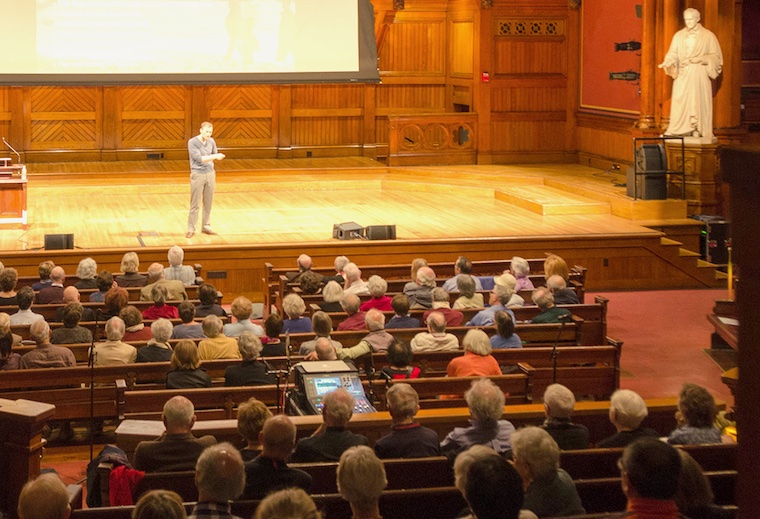
At Harvard University, there are some conference series organised entirely by the students, of course with the help of the faculty.
I have attended two of these conferences – the Africa Health Conference organised by the students of the Harvard T.H. Chan School of Public Health and the Africa Development Conference organized by the students of the Harvard Law School and the Harvard Kennedy School (HKS), officially known as the John F. Kennedy School of Government, where I am attached as a fellow at the Carr Center for Human Rights Policy.
I would like to share some lessons I have learnt from these two conferences that could be helpful for Makerere University, my home institution, and any other Ugandan university that may care to enrich the way they organise public events.
The purpose of visiting fellowships and professorships is that we may pick lessons in the places we visit that can make home a better place, what with the general sense of disorganization and disorientation that is eating deep into our institutions.
I will mention just three lessons. First, the idea of a student-organised conference gives students not just organisational leadership skills but also the opportunity to engage with important people whom they identify, invite, and host. At the Africa Health Conference, there were two speakers from Tanzania, most likely suggested for invitation by the chair of the conference who hails from that country.
One of them was Dr Ellen Mkondya-Senkoro, the founding CEO of the Benjamin William Mkapa Foundation, and chair of the governing board of Muhimbili national hospital, a national referral hospital, research center and university-teaching hospital. Imagine how important this contact is for the chair-student who in May 2024 is graduating with a master of Public Health, ready to contribute to her country.
At the Africa Development Conference, there were resourceful people who are contributing to their countries and to the African continent in different areas such as entrepreneurship and corporate governance. I mention just five: Armando Manuel (chairman of the Sovereign Fund of Angola); Tope Lawani (co-founder of the Helios Investment Partners); Dr Niagale Bagayoko, political scientist and chair, African Security Sector Network; Peter Gregory Obi, a Nigerian businessman and politician who served as the governor of Anambra State and ran for president in the 2023 elections in Nigeria; and Lindi Delight, who runs the Spektra Music Academy in Berlin, Germany. I have started working with Lindi to turn some of my poems into music.
At these conferences, the students did everything, including deciding on the topics to discuss, who to moderate the sessions, and who to introduce the speakers. In other words, they were in charge from start to finish. Imagine the experience they get from doing this work, as well as the sense of achievement they carry around them after successfully accomplishing the task.
Secondly, the conferences did not involve crowds of attendees – at each of them, we were about 50 or 60 people in total. Back home, a successful conference is one where we have a huge crowd that looks like a public rally. If the Yusuf Lule Central Teaching Facility Auditorium is not full, the organizers feel they have not achieved much. I think we should disinvest from this idea that a successful conference is one that brings hundreds of people together.
Finally, the protocol here is limited: At the conference, you delve immediately into the talks and discussions without too much ado about protocol and titles. I think this is because of three cultural differences: Here, people do not need to be called by their titles (Professor, PhD holder, PhD candidate, etc.).
Even a distinguished professor insists on being called by his or her first name: Mathias or Ruth. Second, people write their own speeches; so, they speak for a very short time because they say what they have to say. Finally, people go for substance-and-substance only, not for pompous presentations and performances of themselves.
Of course there is a downside to this: the conferences here are devoid of glamour like the kind you see at home. Even gifts are silently given to the presenters. I have caught myself expecting a wonderfully choreographed closing speech full of Makererean pomp, only to see none.
And there are no energetic men and women from the music school, showing off their skills. These make me miss our Ugandan conferences.
The major point I would like to make is that we need to sponsor students to organise their own conferences, from start to finish, as a way of teaching them, in a practical manner, what it takes to organise a successful event.
The writer teaches in the department of Literature at Makerere University where he is an associate professor.
Source: The Observer
Share this content: