
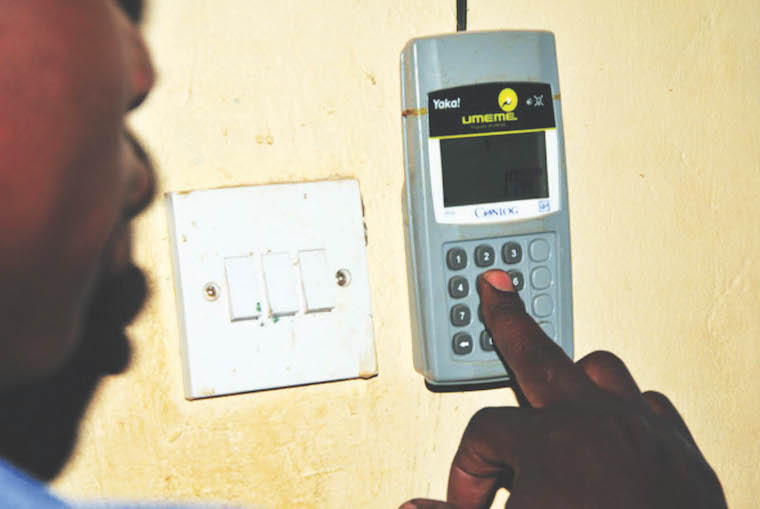
The Electricity Regulatory Authority (ERA) has announced a reduction in electricity tariffs for the second quarter, bringing relief to households and businesses struggling with high energy costs.
The approved tariffs have been determined in consideration of the changes in the macroeconomic factors of; international prices of fuel, the exchange rate of the Uganda shilling against the dollar, the core consumer price index, the energy generation mix and costs approved by the authority.
According to the new tariffs, domestic consumers under the lifeline category will pay Shs 250 for the first 15 units and then Shs 805, for 16-80 units, and a reduction of Shs 3.9 from 808.9 in the last quarter. Customers buying between 81 and 150 units will pay Shs 412 while consumers purchasing more than 150 units will pay Shs 805, from Shs 808.9 which was charged during the last quarter.
Commercial consumers will pay Shs 611.8, from Shs 624.6; medium industrial consumers will pay Shs 461.8, from Shs 472.3, large industrial consumers will pay Shs 384.4, from Shs 386.3 and extra large consumers Shs 325.0 from Shs 326.6. ERA, however, maintained tariffs for street lighting at Shs 370.
According to Julius Wandera, the director of Corporate and Consumer Affairs at ERA, January and February were quite dry months, which affected the hydrology of several rivers. Most of the small hydro mini power plants had little water, which impacted the level of power generation.
Uganda Electricity Transmission Company Limited, the bulk purchaser of electricity, resorted to purchasing power from the large hydro plants to compensate for the dispatch that would have come from the small mini-hydropower plants.
“We experienced a reduction in the generation from the biogas plants. This was linked to the reduced supply of cane, which is used as fuel for generating electricity. Therefore, there were a lot of dispatches from the large power plants such as Nalubaale, Isimba and Bujagali that are connected to the national grid,” he said.
Wandera said the outlook for the coming quarter shows that we have gotten into the rainy season and we expect the small mini hydro power plants to pick up their generation capacity.
ERA noted that there was increasing electricity demand. For February 2023, the peak demand hit 863MW, the highest recorded maximum demand in the country.
“Electricity consumption has increased compared to the first quarter of 2022. The increase is linked to organic growth compared to the quarter of 2022 when the economy was still recovering from the effects of the Covid-19 pandemic. Most sectors of the economy have now reopened and we are seeing increased demand and consumption of electricity,” he said.
EXCHANGE RATE
Wandera said operators in the electricity supply industry fully recover the costs they incur, especially the importation of the equipment. The authority adjusts the costs to make sure that they align with the exchange rate.
The exchange rate that has been used for the second quarter of the year is Shs 3721.83. The authority said there was an appreciation of the shilling against the USA dollar. There was an appreciation of the shilling of 0.44 per cent from the base exchange rate that was used in the determination of the base tariffs.
OIL PRICES
Wandera said there was a continuous decline in the price of fuel as announced by Organisation of Petroleum Exporting Countries (OPEC). The authority used a price of $89.73 per barrel. The prices, however, dropped to $81.88 per barrel, an 8.75 per cent decrease in the price of international fuel.
Source: The Observer
Share this content: